Timpanogos Cave: The 45-Degree World You Have to Climb 1,092 Feet to Reach
By Utah Untamed Editorial · Published
Timpanogos Cave National Monument is a three-cave system set high in the wall of American Fork Canyon, about 40 miles south of Salt Lake City. You can only reach it by hiking a strenuous, paved 1.5-mile trail that climbs 1,092 feet, and can only enter on a ranger-guided tour during the summer season. Inside, the air holds a steady 45 degrees and the walls are hung with rare helictites — twisting calcite formations that grow against gravity. Tours run from about May or June into September or October and routinely sell out days ahead.
Timpanogos Cave is a three-chamber cave system northeast of American Fork, Utah, that you can only reach by hiking a strenuous 1.5-mile paved trail up the wall of American Fork Canyon — a climb of 1,092 feet — and can only enter on a ranger-guided tour during the summer season. The reward at the top is a 55-minute walk through Hansen, Middle, and Timpanogos caves, where the temperature holds at a steady 45 degrees and the walls are covered in some of the most delicate mineral formations in the country. If you want the short version: yes, it’s worth it, and no, the hike is not a warm-up you can skip.
Here’s what most people miss until they’re standing at the trailhead, sweating, looking up. The cave isn’t at the bottom of the canyon. It’s near the top of the cliff, 6,730 feet above sea level, and the only way in is on your own two feet.
You hike to this cave. That’s the whole catch.
There’s no shuttle, no elevator, no drive-up entrance. The trail leaves the visitor center in American Fork Canyon and switchbacks up the south wall for a mile and a half, gaining 1,092 feet the entire way. It’s paved and wide enough that it’s doable for most reasonably fit people, but the National Park Service calls it strenuous, and it means it. On a hot afternoon the trail surface can top 100 degrees with real drop-offs on the downhill side and almost no shade.
Plan on about three and a half hours round trip: roughly an hour up, the 55-minute tour, and the walk back down. The ticket time you buy is not the time you enter the cave — it’s the time you start hiking from the trailhead. Miss it by too much and you miss the tour.
The trade for that climb is immediate the moment you step through the door. Outside it’s July. Inside it’s 45 degrees, year-round, in every chamber. Bring a jacket or a sweater; people forget, then spend the whole tour cold. The rangers have heard every version of “I didn’t think it would be this cold.”
Three caves, two tunnels, one wall of rock
What everyone calls “Timpanogos Cave” is actually three separate caves stitched together. Hansen Cave, Middle Cave, and Timpanogos Cave each opened onto the canyon wall on their own, discovered decades apart. In the 1930s, crews from the Works Progress Administration blasted two connecting tunnels through the rock between them, so today a single tour threads all three: in through a man-made entrance near Hansen, through a tunnel to Middle Cave, through a second tunnel to Timpanogos Cave, and back out near where you came in.
The regular tour runs 55 minutes and covers all three chambers. Groups are capped at 16 people, there are several steep flights of stairs and some genuinely narrow passages, and every person needs a ticket — infants included.
The cave system sits inside the Deseret Limestone, rock laid down roughly 340 million years ago when this was seafloor. The cavities themselves opened along faults branching off the Wasatch Fault, then hot groundwater and the slow uplift of the whole mountain range did the hollowing. The formations you see draped across the walls are much younger — they only began growing within the last 750,000 years, as the caves lifted above the stream that carved the canyon.
The formations that made a tiny monument famous
Timpanogos is known for helictites — thin, twisting, hollow straws of calcite and aragonite that grow sideways and upward, curling against gravity as if the physics doesn’t apply. They form when water creeps through a microscopic tube and evaporates at the tip, leaving a speck of mineral behind, over and over, for thousands of years. Most caves have a few. Timpanogos has them in unusual abundance, and they are the single biggest reason a small cave in a Utah canyon draws visitors from around the world.
The signature piece is the Great Heart of Timpanogos, a large reddish formation hanging where the tour passes between chambers — the image most people carry out of the cave. Around it you’ll see the full vocabulary of a limestone cave: flowstone that looks like poured wax, “cave bacon” striped in translucent bands, popcorn-textured knobs, draperies, columns where a stalactite and stalagmite finally met, and pools tinted green and gold by dissolved minerals.
You are not allowed to touch any of it. The oil from a single fingertip stops a formation from growing where it lands. That rule is the whole reason these caves still look the way they do.
A woodcutter, some cougar tracks, and a cave nobody could keep secret
The first cave was found by accident. In October 1887, a Danish immigrant and woodcutter named Martin Hansen was felling timber on the canyon’s south wall. A light snow fell overnight, and when he came back he noticed mountain lion tracks. He followed them up the cliff, and where the tracks ended he found an opening in the rock — a chamber full of formations. It became Hansen Cave.
That discovery came with a hard lesson. Before anyone thought to protect it, commercial operators and souvenir hunters stripped Hansen Cave of much of its best material, hauling formations out to sell. It’s the reason the first cave on the tour looks barer than the two that follow.
Timpanogos Cave — the showpiece — was found in the summer of 1913 by two teenagers, James Gough and Frank Johnson, who wandered off from a family trip to Hansen Cave and scrambled up a nearby slope into a new entrance. Then, remarkably, the location was lost, buried by rockfall and guarded by the finders’ own secrecy. It stayed lost for eight years until Vearl Manwill rediscovered it on August 14, 1921. That same night, having watched what happened to Hansen Cave, Manwill’s group pledged to protect this one instead of letting it be vandalized. The third cave, Middle Cave, turned up that October when two of Martin Hansen’s descendants spotted a hole in the cliff through binoculars while hunting deer. The 74-year-old Hansen was the first to walk into it.
The monument was established on October 14, 1922. The Park Service took over in 1933, WPA crews built the tunnels and trail structures through that decade, and the caves have been managed for preservation — capped tour sizes, limited lighting, a strict no-touch rule — ever since.
The honest part: this is not a casual stop
If you’re bringing kids, read this twice. The hike is steep and hot with exposed drop-offs. Strollers and wagons aren’t allowed on the trail — only baby carriers, and even then external-frame packs are banned inside the cave. The chambers are cold, dark, and full of things a curious three-year-old cannot touch. Plenty of families love it. Some spend three and a half hours managing a meltdown at 6,700 feet. Be honest with yourself about which one you’ll be.
Two more real constraints. To protect Utah’s bats from white-nose syndrome, the monument bans any boots, clothing, or gear — cameras included — that have ever been in another cave or mine, anywhere, at any time. And no pets on the trail or in the caves, ever.
Planning your 2026 visit
The cave tour season typically runs from May or June into September or October, set each year by snowpack, staffing, and budget — so confirm before you drive up. Tours run seven days a week during the season, starting every 15 to 30 minutes, with regular tours generally beginning around 8:15 a.m.
Buy tickets in advance through Recreation.gov or by calling 877-444-6777. Tickets open 30 days out and routinely sell days or weeks ahead; people who show up hoping to walk on are often turned away because the day is full. It’s card only now — no cash, no check.
Getting there: the monument is in American Fork Canyon on Highway 92, about 10 miles east of I-15 and roughly 40 miles from Salt Lake City. The Park Service warns against trusting your GPS — it likes to route people into subdivisions or the long way through Provo Canyon. Search the monument by name and check the route before you go.
Wear real shoes, carry water, start early to beat the heat on the trail, and pack that jacket you won’t think you need. The mountain is doing something it’s done for three-quarters of a million years, and for a few months a year it lets you walk inside and watch.
Frequently Asked Questions
Is Timpanogos Cave worth visiting? add
Yes, if you're up for the hike. The 1.5-mile, 1,092-foot climb to the entrance is strenuous, but the 55-minute tour through three connected caves — packed with rare helictite formations and holding a steady 45 degrees in summer heat — is one of the most distinctive experiences in northern Utah.
How long and hard is the Timpanogos Cave hike? add
The trail is 1.5 miles one way and gains 1,092 feet, reaching 6,730 feet of elevation. It is paved but steep, with exposed drop-offs and trail temperatures over 100°F on hot days. Budget about 3.5 hours round trip including the cave tour.
How cold is it inside Timpanogos Cave? add
The caves stay around 45 degrees Fahrenheit year-round. Bring a jacket or sweater even in July.
Do you need tickets for Timpanogos Cave, and do they sell out? add
Yes. Every person needs a ticket, including infants, and the caves can only be entered on a ranger-guided tour. Tickets go on sale 30 days ahead through Recreation.gov (877-444-6777) and often sell out days or weeks in advance. Card only.
When is Timpanogos Cave open? add
The season typically runs May or June through September or October, depending on snow, staffing, and budget. It is closed in winter. Confirm current dates before visiting.
Who discovered Timpanogos Cave? add
Martin Hansen found the first cave, Hansen Cave, in October 1887 by following cougar tracks up the canyon wall. Teenagers James Gough and Frank Johnson found Timpanogos Cave in 1913; it was lost and then rediscovered by Vearl Manwill on August 14, 1921. Middle Cave was found later that year.
Keep Exploring
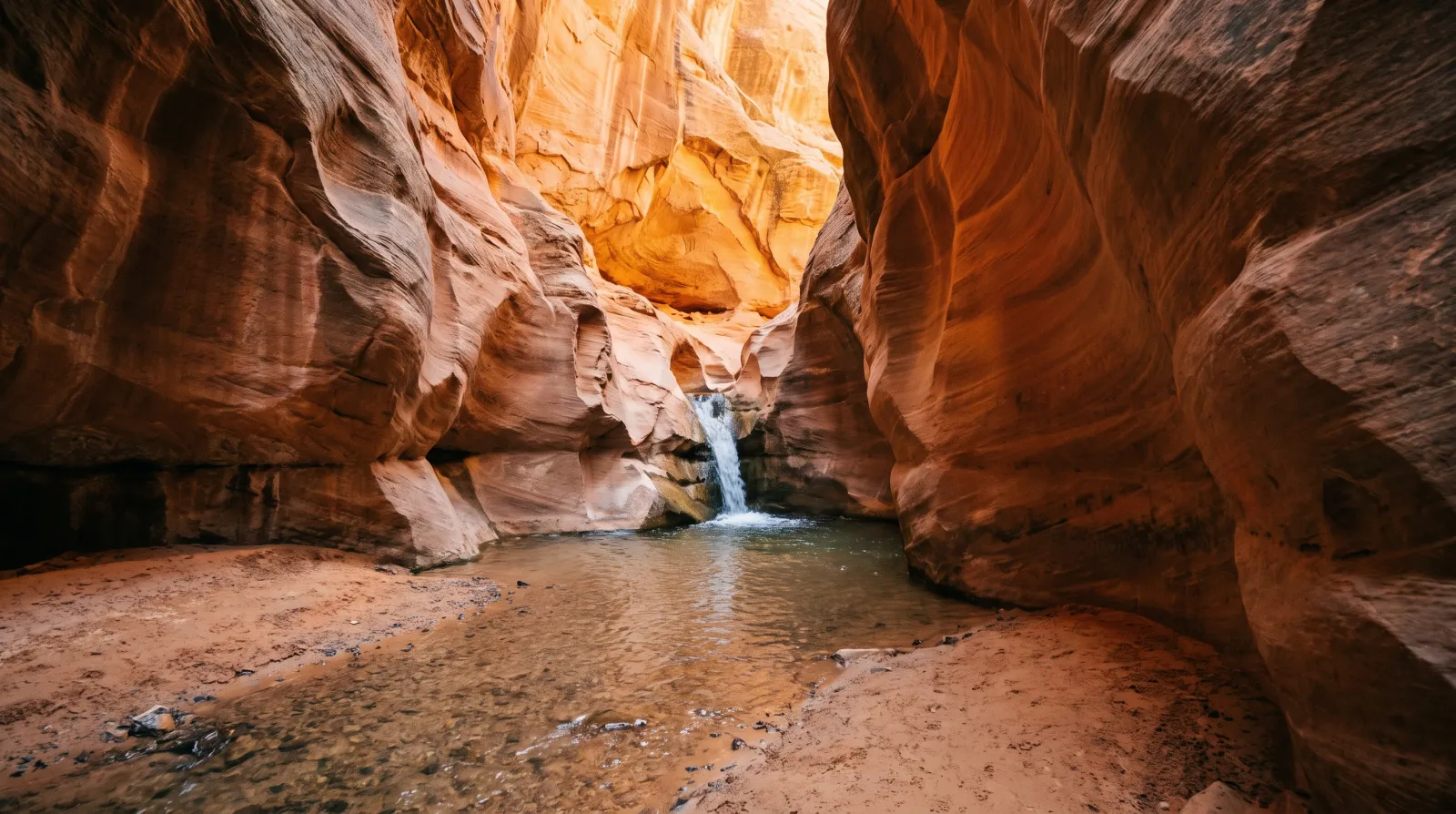
You Need a Permit to Hike Kanarraville Falls — Here's Everything to Know Before You Go
Kanarraville Falls is a year-round slot-canyon wade to a 20-foot waterfall south of Cedar City. The town requires an online permit, sells out weeks ahead in summer, and flew the trail's new staircase in by helicopter.
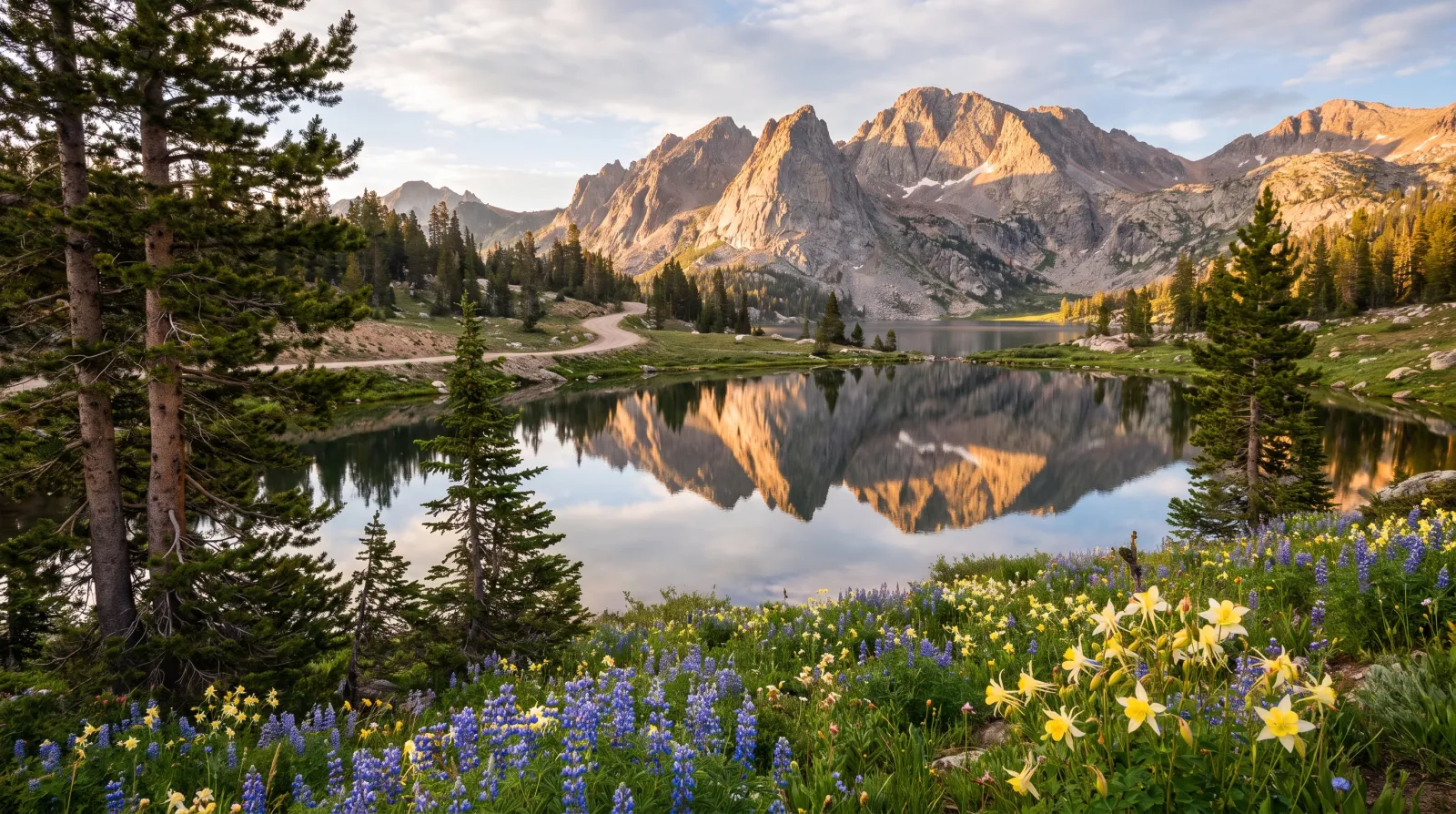
The Mirror Lake Highway: Utah's Highest Paved Escape From the Summer Heat
State Route 150 climbs out of Kamas to Bald Mountain Pass, 10,715 feet, the highest paved road in Utah. The air runs 25 to 30 degrees cooler than the valley, and it opens onto a glacier-carved basin holding more than a thousand alpine lakes.
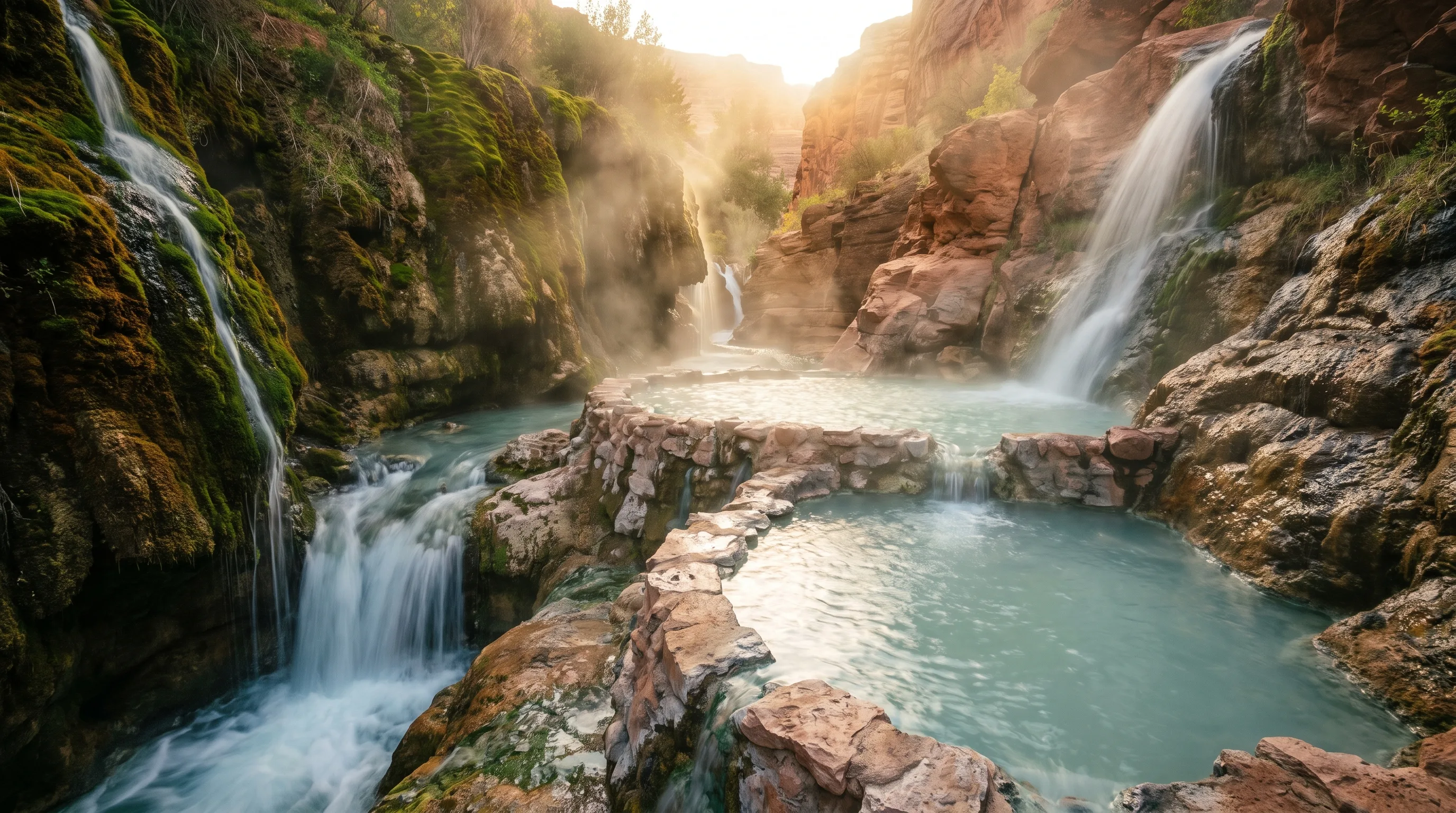
The Best Hot Springs in Utah: 6 Soaks, From a Hike-In Canyon Pool to a 65-Foot Geothermal Dome
The best hot springs in Utah are Fifth Water for the hike, Mystic in Monroe for the vintage-bathtub experience, Crystal in Honeyville for the mineral water and the kids, Homestead Crater for soaking inside a limestone dome, and Red Hill and Meadow for free, no-frills soaks.