You Can Dig Up Utah's State Gem Yourself, and the Law Says You Get to Keep It
By Utah Untamed Editorial · Published
Topaz Mountain in Juab County and the Dugway Geode Beds are two free, BLM-managed rockhounding sites in Utah's West Desert. Topaz Mountain yields amber-colored topaz crystals, Utah's state gem since 1969, that fade to clear in sunlight; the Dugway Geode Beds produce hollow, crystal-lined nodules. Collectors can keep up to 25 pounds per day on BLM land, but both sites are remote, shadeless, and dangerous in summer heat without preparation.
Utah is one of the few states where you can drive onto public land, break open a rock with a hammer, pull out a gemstone, and walk away with it for free — and at Topaz Mountain in the West Desert, that gemstone is the official state gem. No permit. No fee. No claim to file. You bring a bucket and a hammer, and whatever topaz you find in the rhyolite is yours to take home.
That is the short version. The longer version is one of the best family road trips in the state, and also one of the most unforgiving if you show up unprepared. Here is how the two big West Desert rockhounding sites actually work, what you can find, and the honest truth about doing it in summer heat.
Topaz Mountain: amber crystals that vanish in the sun
Topaz Mountain sits at the southern end of the Thomas Range in Juab County, roughly 70 miles northwest of Delta. The whole area is Bureau of Land Management public land, and it is one of the most popular and productive free collecting sites in the western United States. People have been coming here with rock hammers for generations.
The gem itself has a strange trick. Topaz crystals from the Thomas Range come out of the ground a warm amber, sometimes called sherry-colored, and that color is not permanent. Leave the crystals in direct sunlight and they fade to colorless within days. The clear topaz you see in rock shops from this spot is often amber topaz that has simply spent time in the sun. If you want to keep the honey color, you keep the stones in the dark.
The crystals formed inside gas pockets in the Topaz Mountain Rhyolite, a volcanic rock that erupted from vents along faults here around six to seven million years ago. As the lava cooled, gases collected in cavities, and topaz and a handful of other minerals crystallized inside those hollow pockets, called vugs. That is why the technique works the way it does: you look for the weathered rhyolite, break it open along the cavities, and check the little crystal-lined pockets. Loose crystals also wash down and collect in the soil around the outcrops, so a lot of people just sift the dirt at the base of the rock.
Topaz is not the only thing in the ground here. Collectors also turn up amethyst, garnet, opal, hematite, and traces of red beryl, the rarest gem on this list by a wide margin.
One thing to know before you go: not all of Topaz Mountain is still free. A section of roughly 40 acres, including the productive Topaz Knoll, has been placed under a private lease and is no longer open to public collecting. A fee-dig operator works that leased ground for a per-person daily charge. Most of the surrounding “Topaz Bowl,” though, is still open BLM land where collecting stays free. If you want the no-cost version, stick to the public ground and read the posted signs — the lease boundary is marked, and it is worth respecting.
Utah’s state gem, and the gem that’s rarer than diamond
Utah named topaz its official state gem in 1969, and it named it specifically for the crystals from this range. So the rock you pry out of the Thomas Range is not a generic souvenir. It is the literal thing the state legislature pointed at.
The West Desert holds a rarer prize, too, though this one you cannot dig for free. Red beryl — a deep raspberry-red cousin of emerald and aquamarine — is one of the scarcest gemstones on Earth. By one common estimate, a single gem-quality red beryl turns up for roughly every 150,000 diamonds, and fine stones can be valued at many times the price of gold. Gem-quality red beryl is known from only three places on the planet: the Thomas Range and the Wah Wah Mountains in Utah, and the Black Range in New Mexico. The one deposit that has produced large, cuttable, gem-grade crystals is the Ruby-Violet claim area in the Wah Wah Mountains of Beaver County.
Here is the part that matters if you are planning a trip: those Wah Wah claims are private. You cannot walk in and dig gem red beryl for free the way you can dig topaz. The tiny red beryl crystals that show up at Topaz Mountain are a genuine find and a great story, but the famous gem-grade material comes from patented private claims, not open public land.
The Dugway Geode Beds: crack one open and see what’s inside
About an hour from Delta in the other direction, the Dugway Geode Beds offer the other classic Utah rockhounding experience: geodes. These are hollow, round nodules — plain and gray on the outside, often lined with quartz or amethyst crystals on the inside. You do not know what you have until you crack it open, which is exactly the appeal.
The beds sit on BLM public land and are free to collect for personal use, with no permit required. The geodes here weathered out of an old volcanic ash bed and now lie scattered across low hills, generally running two to four inches across. Some are solid, some are hollow, some are lined with sparkling crystal. The surface near the main parking area gets picked over, so the standard advice is to walk a quarter mile in any direction and dig into fresh ground, or bring a shovel and work the soft tuff a foot or two down where unbroken geodes still sit.
Getting there is part of the commitment. From Delta you drive about 38 miles west on US-6/US-50, then turn south onto a signed dirt road and follow it roughly 12 miles to the collecting area. It is around an hour each way in dry weather, and the round trip runs close to 100 miles with a big chunk of that on dirt. There is no gas between Delta and the beds, and no services at the site.
How much can you legally take?
This is the question that trips people up, and the answer is simple. On BLM public land, rock, mineral, and semiprecious gemstone collecting for personal use is capped at a reasonable amount — the BLM sets that at up to 25 pounds per day plus one piece, with a hard ceiling of 250 pounds per year per person. You cannot pool those limits to haul out a boulder, and you cannot collect to sell it commercially under the personal-use rule. For a family filling a couple of buckets with topaz and geodes, 25 pounds a day is far more than you will realistically carry out. Collecting is for personal use only, and it stays on BLM and unclaimed public ground — not in state parks, not on active mining claims, and not on the leased sections.
The honest part: this is the desert, and it does not care
Everything above makes this sound like an easy afternoon. In summer, it is not. Both sites sit in Utah’s West Desert, which is one of the hottest, driest, emptiest corners of the state.
There is no shade at either location. None. Summer highs run well into the triple digits, and you are out on exposed rock with the sun bouncing back up at you. There is no drinking water, no gas, and, at Dugway especially, no cell service for the last stretch. The dirt roads are littered with sharp volcanic fragments that cause flat tires often enough that a full-size spare, not a donut, is standard advice, along with the tools to change it.
So the plan is straightforward. Go early or go late, not at noon. Carry far more water than you think you need, for every person. Bring a real spare, work gloves, safety glasses for the hammering, sunscreen, and a hat. Tell someone your route and when you will be back. Download offline maps before you lose signal. And treat the West Desert with respect, because help is a long way off.
Do that, and you get a day that ends with a bucket of your own topaz that used to be lava, a geode you split open on the tailgate, and a genuinely rare answer to “what did you do this weekend.”
Frequently Asked Questions
Where can you find topaz in Utah? add
At Topaz Mountain in the Thomas Range, Juab County, about 70 miles northwest of Delta. It is Bureau of Land Management public land, and collecting topaz there is free.
Is Topaz Mountain free to collect? add
Most of it, yes. The surrounding public BLM land is free to collect. A roughly 40-acre leased section, including the Topaz Knoll, is private and run as a paid fee-dig. Watch for the posted lease boundary.
What is Utah's state gem? add
Topaz. The Utah Legislature designated it the state gem in 1969, specifically for the crystals from the Thomas Range.
How much rock can you legally collect on BLM land in Utah? add
For personal use, up to 25 pounds per day plus one piece, capped at 250 pounds per year per person. Collecting to resell commercially is not allowed under the personal-use rule.
Keep Exploring
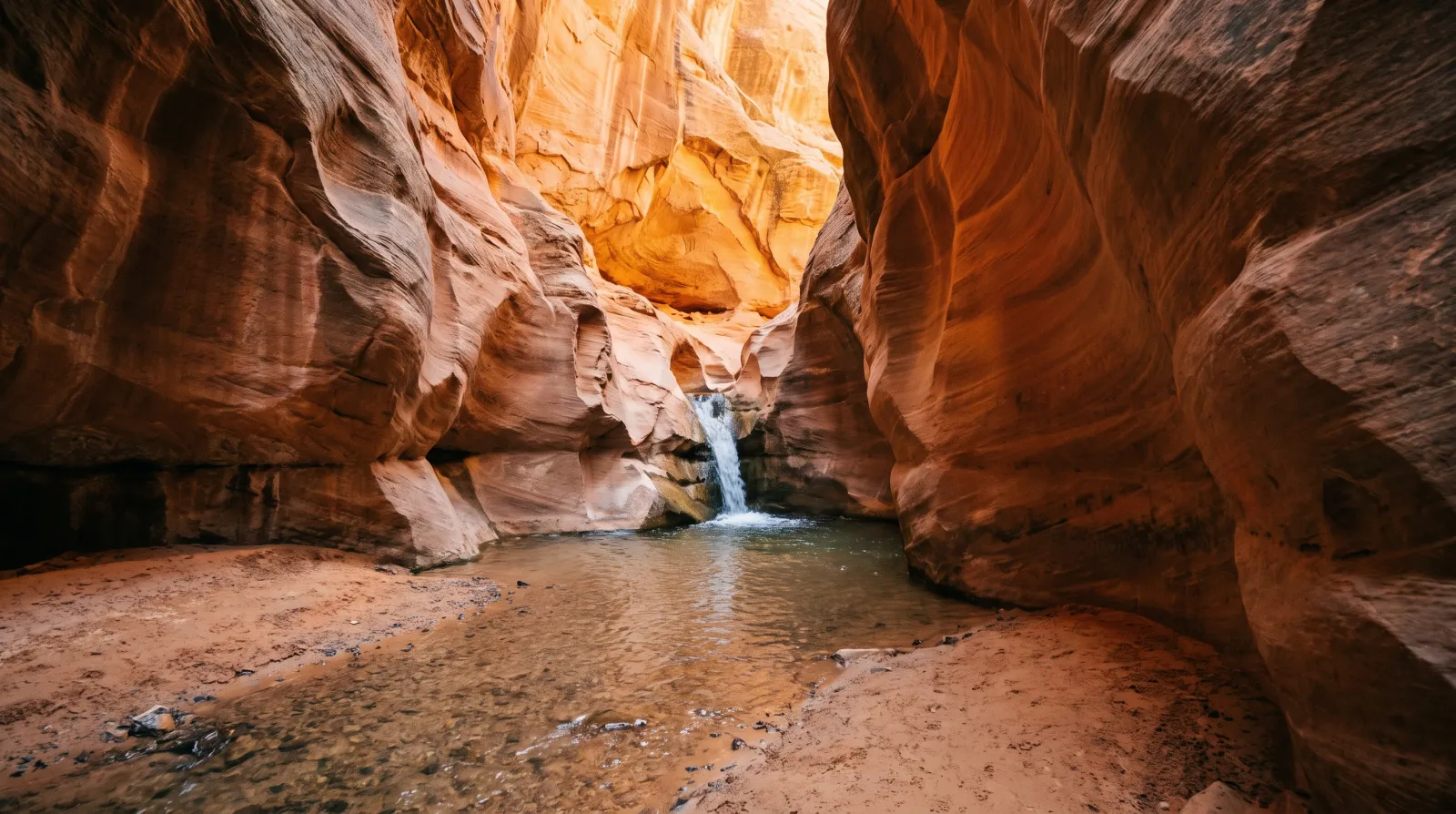
You Need a Permit to Hike Kanarraville Falls — Here's Everything to Know Before You Go
Kanarraville Falls is a year-round slot-canyon wade to a 20-foot waterfall south of Cedar City. The town requires an online permit, sells out weeks ahead in summer, and flew the trail's new staircase in by helicopter.
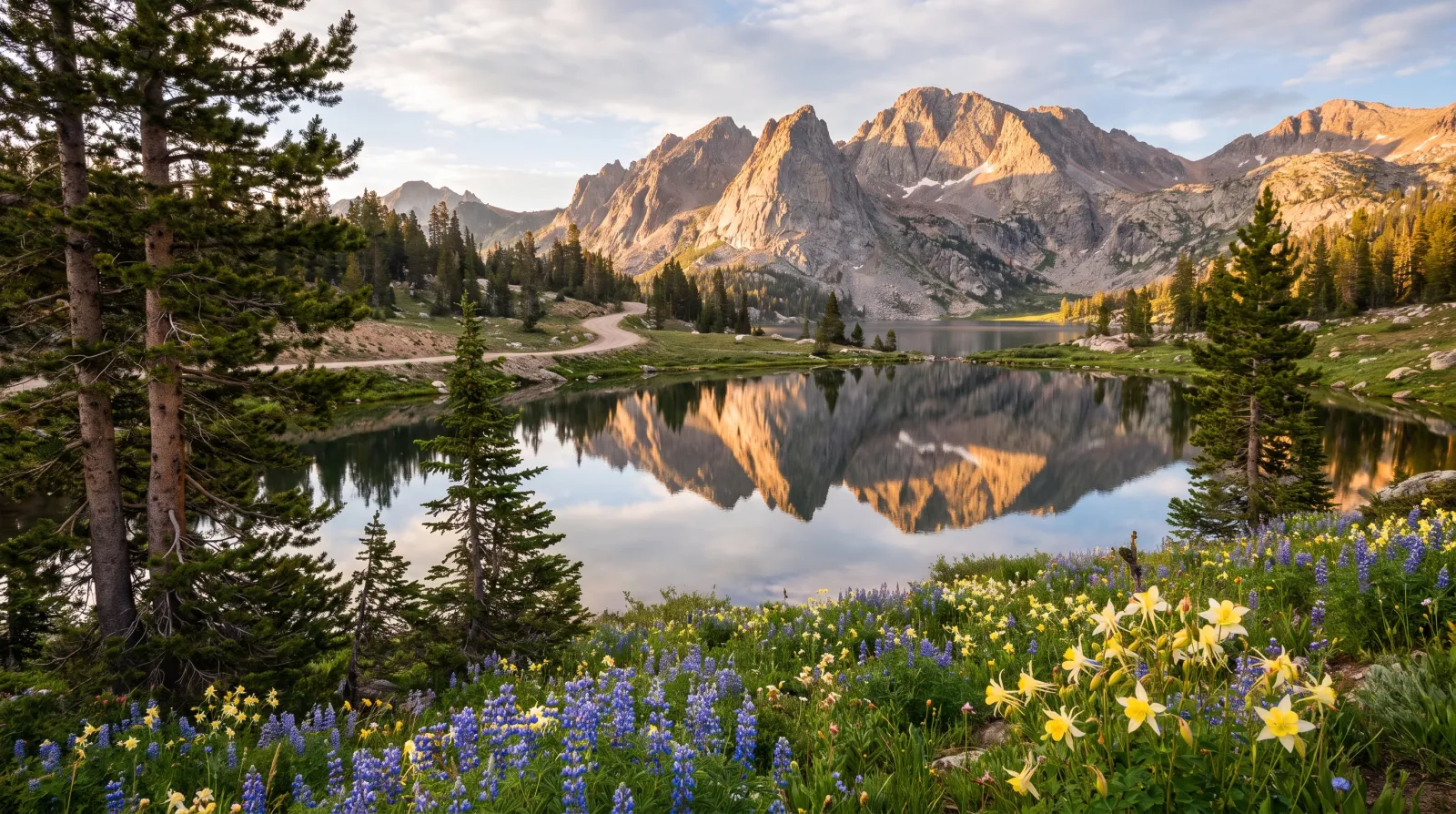
The Mirror Lake Highway: Utah's Highest Paved Escape From the Summer Heat
State Route 150 climbs out of Kamas to Bald Mountain Pass, 10,715 feet, the highest paved road in Utah. The air runs 25 to 30 degrees cooler than the valley, and it opens onto a glacier-carved basin holding more than a thousand alpine lakes.
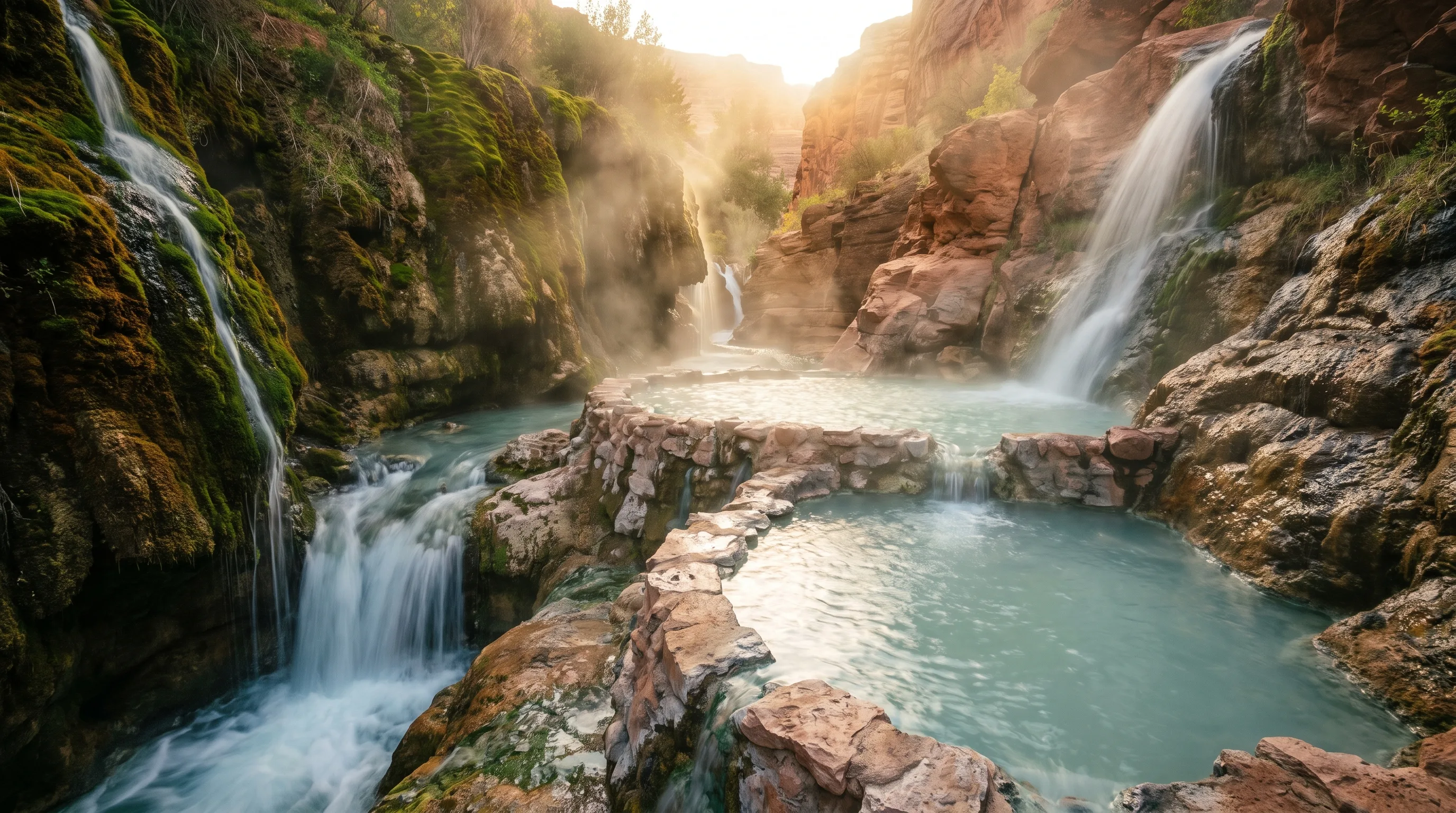
The Best Hot Springs in Utah: 6 Soaks, From a Hike-In Canyon Pool to a 65-Foot Geothermal Dome
The best hot springs in Utah are Fifth Water for the hike, Mystic in Monroe for the vintage-bathtub experience, Crystal in Honeyville for the mineral water and the kids, Homestead Crater for soaking inside a limestone dome, and Red Hill and Meadow for free, no-frills soaks.