Buckskin Gulch: Inside the Longest Slot Canyon on Earth — and Why You Shouldn't Hike It in Monsoon Season
By Utah Untamed Editorial · Published
Buckskin Gulch, reached from the Wire Pass Trailhead off House Rock Valley Road near Kanab, is widely regarded as the longest continuous slot canyon in the world, running roughly 13 to 15 miles with walls up to 500 feet tall and a floor that narrows to under five feet in places. A day-use permit costs $6 per person. From mid-July through mid-September, monsoon season brings a serious flash-flood risk — a March 2023 flood killed two hikers inside the canyon — so the BLM advises against entering if there's any chance of rain in the region.
Buckskin Gulch is widely regarded as the longest slot canyon in the world: a continuous crack in the sandstone that runs roughly 13 to 15 miles with almost no break, on the Utah–Arizona border about an hour southeast of Kanab. In places the walls stand 500 feet tall while the floor squeezes to less than the width of your shoulders. It is one of the most photographed hikes in the Southwest and one of the most dangerous, and both of those things come from the same fact: once you’re deep inside, there is nowhere to climb out.
That is worth sitting with before you plan a trip, especially during monsoon season. From mid-July through mid-September, Buckskin Gulch is not a hike we recommend without a genuinely dry forecast and real caution. The reason is the whole story of the place, so start there.
What Buckskin Gulch actually is
A slot canyon forms when water finds a weakness in soft sandstone and spends a few million years widening it downward instead of outward. Most slots are short — a few hundred yards of narrows before the walls fall away. Buckskin is different in scale. It carves through Navajo sandstone as a tributary of the Paria River, and the narrows hold for mile after mile, cool and dim, the sky reduced to a bright ribbon far overhead.
The numbers are what put it on the map. The continuous narrows run somewhere between 13 and 15 miles depending on where you start counting, which is why so many guidebooks and the BLM itself describe it as the longest slot canyon in the country, and often the world. The walls average 300 to 500 feet of vertical sandstone. The floor, in the tightest stretches, closes to under five feet — narrow enough that you turn sideways and drag a pack behind you. Sunlight rarely reaches the bottom. Water pools in the low spots long after the last rain, sometimes waist-deep and cold, sometimes a stinking wallow of mud that hikers have nicknamed the Cesspool.
It sits inside the Paria Canyon–Vermilion Cliffs Wilderness, managed by the Bureau of Land Management. The canyon itself crosses the state line, but the trailheads people use are on the Utah side, off House Rock Valley Road between Kanab and Page.
Getting there and getting in
Most day hikers reach Buckskin through the Wire Pass Trailhead, the shortest door in. From the parking area it’s about 1.7 miles down Wire Pass — a slot in its own right, complete with a short ladder and a chockstone drop of a few feet — before the walls open into a wide alcove where Wire Pass meets Buckskin Gulch. On the rock at that junction is a panel of petroglyphs: bighorn sheep and figures pecked into the desert varnish by people who walked this drainage centuries ago. That confluence is the payoff for a lot of day hikers. Turn left into Buckskin and the real narrows begin.
A day-use permit is required, and it’s cheap: $6 per person and $6 per dog, paid at the trailhead in cash or check. Interagency and Senior passes are not accepted, so bring exact change. Overnight trips through the full canyon to its meeting with the Paria River — a roughly 20-plus-mile backpack that exits at the White House Trailhead — need a separate, limited overnight permit through the BLM, and those book out fast.
Why monsoon season changes everything
Here is the part that matters most. A slot canyon is a funnel. Rain that falls anywhere in the drainage — miles away, over a horizon you can’t see, under a sky that looks clear from where you’re standing — collects on the slickrock, which absorbs almost nothing, and pours into the narrows as a wall of water, mud, and debris. As little as a quarter inch of rain across the watershed can send a flash flood down Buckskin. Inside the tightest miles there is no high ground, no side exit, no ledge to scramble to. You cannot outrun it and you cannot climb the walls.
Monsoon season in this corner of the Southwest runs from about mid-July through mid-September. Afternoon thunderstorms build fast and move faster, and the storm that floods the canyon does not have to be over the canyon. The BLM’s guidance is blunt: do not enter if there is the slightest chance of rain, and check conditions with the Paria ranger station before you go.
This is not a theoretical risk. In March 2023, an atmospheric river pushed high water through the region and a flash flood tore through Buckskin Gulch while three hikers were inside. Two of them were killed; the third was rescued by helicopter. Local authorities called the run of deaths in the canyon that year unusual, and the lesson from it is the oldest one in canyon country. The weather where you park is not the weather that decides whether you live.
If you want to walk Buckskin, the safer windows are late spring and fall, on a stretch of days with a genuinely dry forecast, with someone who knows the canyon or a detailed trip plan and a hard turnaround rule. During monsoon season, treat it as a fall-list hike rather than a today hike.
Frequently Asked Questions
Where is Buckskin Gulch? add
On the Utah-Arizona border in the Paria Canyon-Vermilion Cliffs Wilderness, reached from House Rock Valley Road off US-89 between Kanab, Utah, and Page, Arizona. The trailheads are on the Utah side.
Is Buckskin Gulch really the longest slot canyon in the world? add
It's widely regarded as such. Its continuous narrows run roughly 13 to 15 miles, longer than any other slot commonly cited, though a few sources hedge to "one of the longest." Either way, it is in a class of its own.
Do you need a permit to hike Buckskin Gulch? add
Yes. Day use is $6 per person and $6 per dog, paid at the trailhead in cash or check. Overnight backpacking requires a separate limited permit through the BLM.
When should you not hike Buckskin Gulch? add
Mid-July through mid-September, monsoon season, when flash floods are most likely — and never on any day with rain anywhere in the forecast for the region.
Keep Exploring
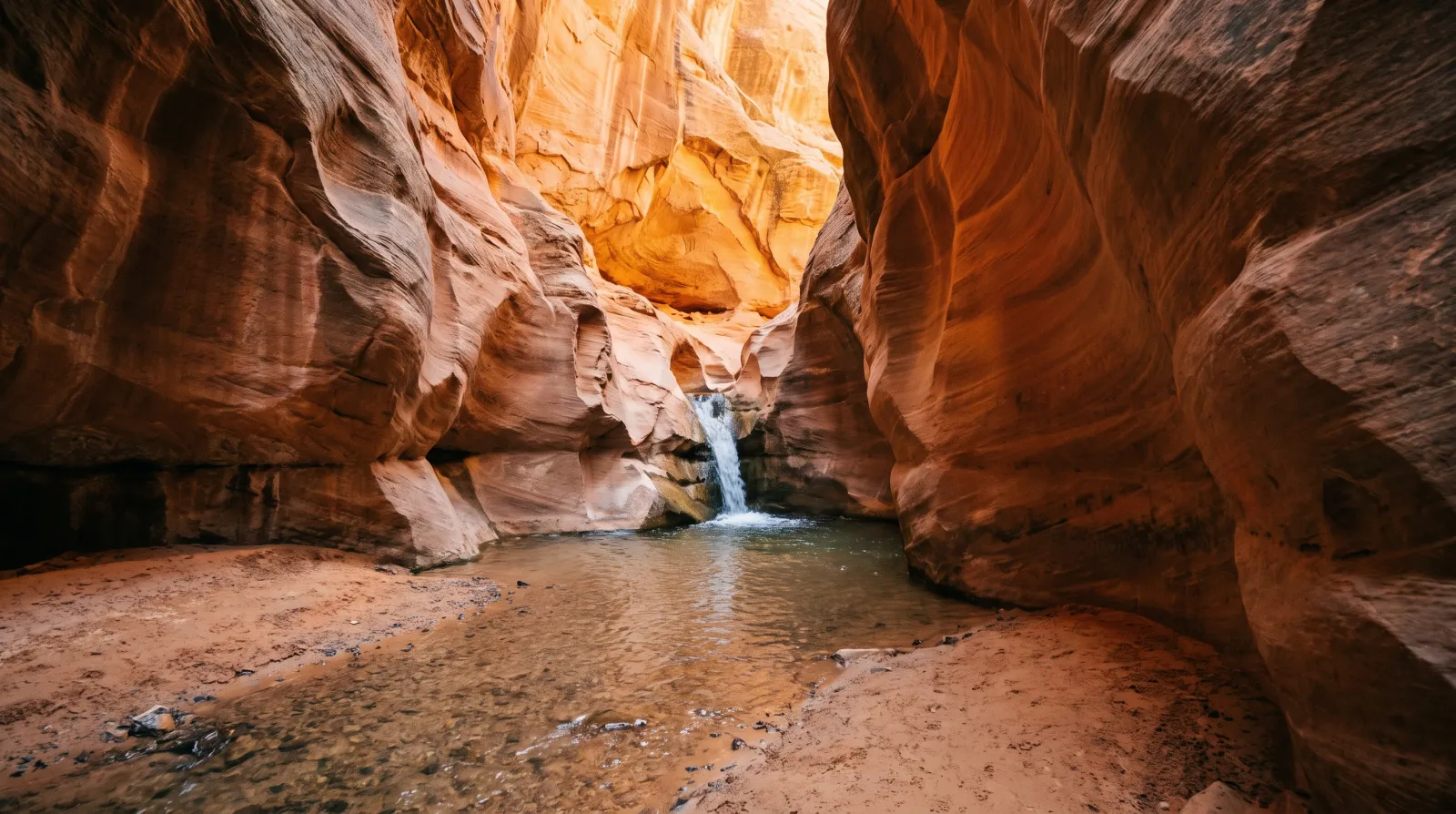
You Need a Permit to Hike Kanarraville Falls — Here's Everything to Know Before You Go
Kanarraville Falls is a year-round slot-canyon wade to a 20-foot waterfall south of Cedar City. The town requires an online permit, sells out weeks ahead in summer, and flew the trail's new staircase in by helicopter.
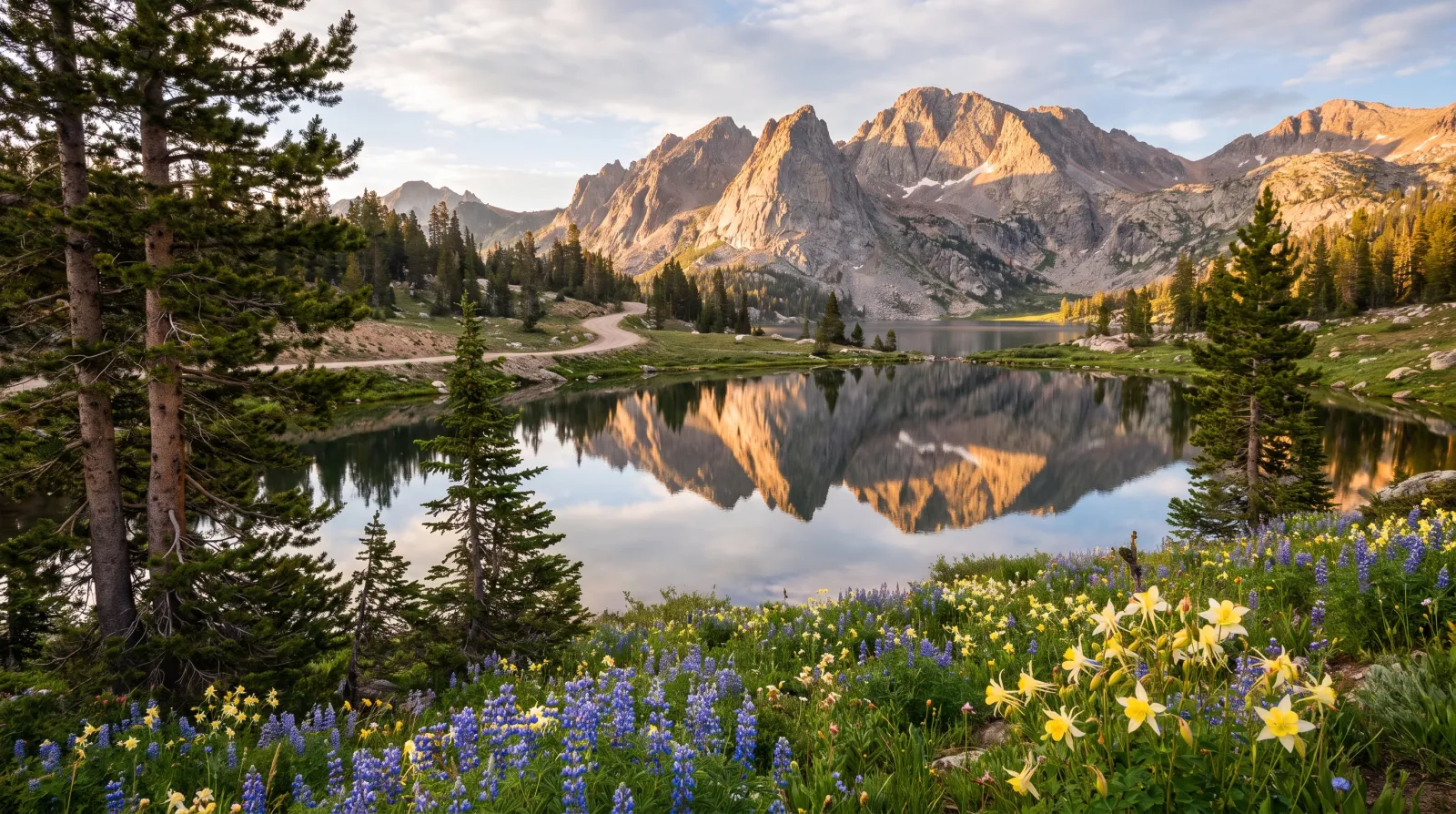
The Mirror Lake Highway: Utah's Highest Paved Escape From the Summer Heat
State Route 150 climbs out of Kamas to Bald Mountain Pass, 10,715 feet, the highest paved road in Utah. The air runs 25 to 30 degrees cooler than the valley, and it opens onto a glacier-carved basin holding more than a thousand alpine lakes.
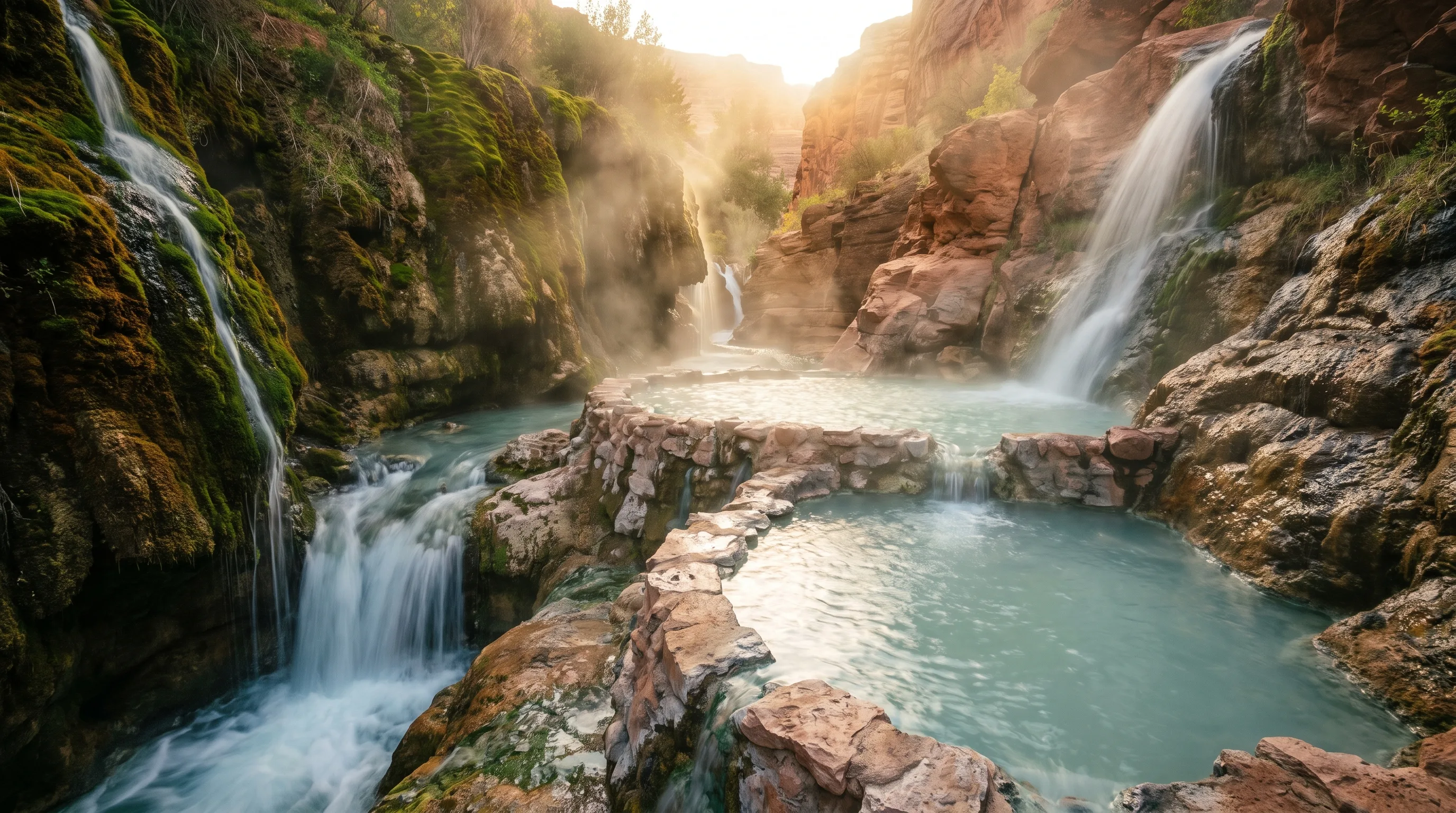
The Best Hot Springs in Utah: 6 Soaks, From a Hike-In Canyon Pool to a 65-Foot Geothermal Dome
The best hot springs in Utah are Fifth Water for the hike, Mystic in Monroe for the vintage-bathtub experience, Crystal in Honeyville for the mineral water and the kids, Homestead Crater for soaking inside a limestone dome, and Red Hill and Meadow for free, no-frills soaks.