Reading the Rocks: The Fremont Culture of Utah
By Utah Untamed Editorial · Published · Updated
The Fremont were a Native American culture that farmed and hunted across Utah from roughly 300 to 1300 CE, leaving behind distinctive petroglyphs, pithouse villages, and clay figurines. You can see their rock art today at sites like Fremont Indian State Park, Nine Mile Canyon, and Capitol Reef National Park.
Long before the pioneers, the Fremont people farmed corn along Utah’s rivers and left their mark in stone — spirals, bighorn sheep, and broad-shouldered figures that still watch over the canyons.
Who were the Fremont people?
For about a thousand years, the Fremont occupied a vast stretch of the Great Basin and Colorado Plateau that covers most of modern Utah. They were contemporaries of the Ancestral Puebloans to the south but kept their own ways: hide moccasins instead of woven sandals, thin gray pottery, and a rock-art style all their own. They built pithouses, stored grain in stone granaries tucked into cliffs, and moved with the seasons between farm plots and hunting grounds.
What the panels tell us
Archaeologists read these petroglyphs as calendar, map, and story all at once. The signature Fremont figure is broad-shouldered and trapezoidal, often crowned with horns or elaborate headdresses and draped in necklaces. Alongside them march bighorn sheep, snakes, and spirals whose meanings we can only partly recover.
At Fremont Indian State Park, near Clear Creek Canyon, one of the largest known Fremont villages was uncovered during the construction of Interstate 70 — a rescue excavation that turned a highway project into one of the most important archaeological finds in the state.
Where to see it today
- Fremont Indian State Park (Sevier) — a museum plus dozens of signed panels on short trails.
- Nine Mile Canyon (near Wellington) — a 40-mile drive past more than 10,000 documented images.
- Capitol Reef National Park — roadside panels along the Fremont River, easy to reach from the scenic drive.
Make it last another thousand years
Treat every panel as irreplaceable. Don’t touch the rock — skin oils accelerate decay — and never chalk or trace a figure. These stories have lasted a thousand years; the goal is another thousand.
Frequently Asked Questions
Who were the Fremont people? add
The Fremont were a pre-Columbian Native American culture that lived across most of present-day Utah from roughly 300 to 1300 CE. They combined farming — corn, beans, and squash — with hunting and gathering, and are distinguished from their Ancestral Puebloan neighbors to the south by their moccasin style, gray pottery, and distinctive rock art.
Where can I see Fremont rock art in Utah? add
The most accessible public sites are Fremont Indian State Park near Sevier, Nine Mile Canyon (often called "the world's longest art gallery") near Wellington, and several panels within Capitol Reef National Park. All are open to the public and signed from nearby highways.
What is the difference between a petroglyph and a pictograph? add
A petroglyph is carved or pecked into the rock surface, while a pictograph is painted on. The Fremont made both, and many Utah panels include the two techniques side by side.
Is it legal to touch or photograph Fremont rock art? add
Photography is welcome and encouraged. Touching is not — skin oils accelerate decay — and damaging or removing rock art is a federal crime under the Archaeological Resources Protection Act. Never chalk, trace, or add to a panel.
Keep Exploring
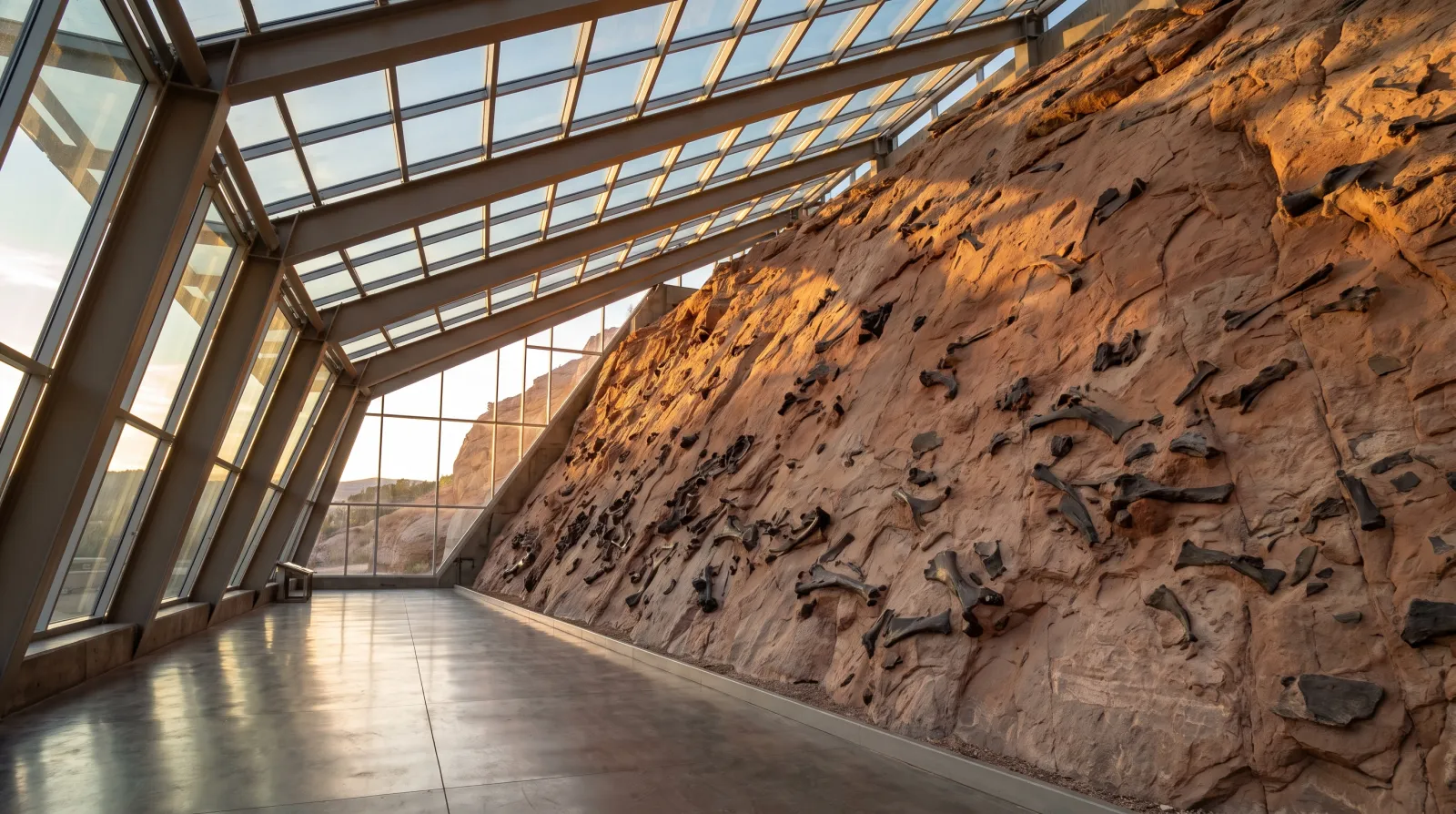
The Wall of Bones: Utah's Quarry Where 1,500 Dinosaurs Are Still in the Rock
Near Jensen, a two-story cliff face inside the Quarry Exhibit Hall holds roughly 1,500 dinosaur bones still locked in 150-million-year-old rock — and at one marked spot, you're allowed to touch one.
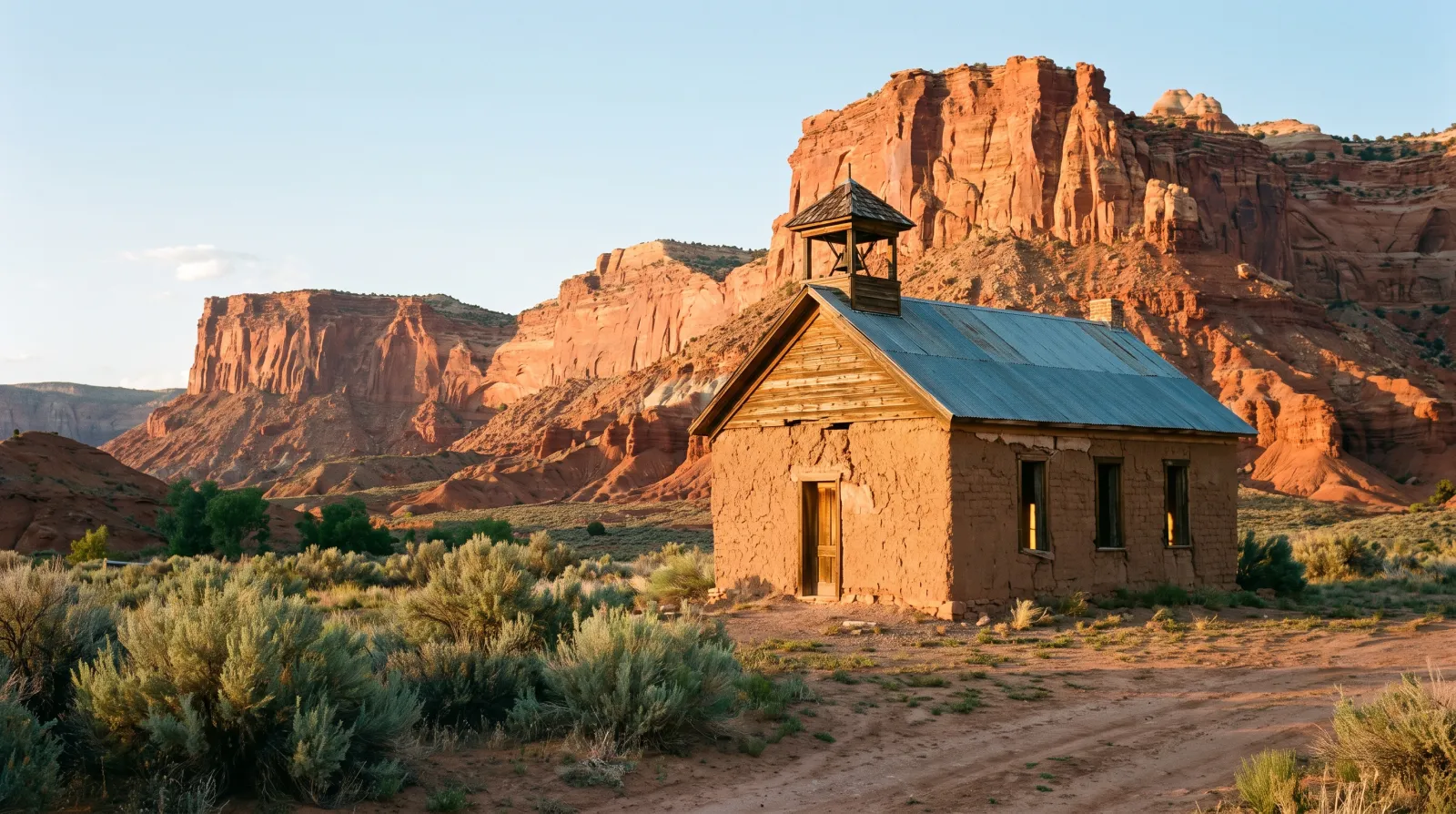
Grafton, Utah: The Ghost Town Below Zion That Refused to Stay Buried
Grafton is a preserved pioneer ghost town on the Virgin River, two miles off the road most Zion visitors never leave. Often called the most photographed ghost town in the West, it's also the unnamed backdrop of Butch Cassidy and the Sundance Kid.

The Alphabet Utah Invented to Replace English
In 1854, Utah's territorial leaders adopted a 38-character phonetic alphabet meant to replace standard English spelling. They printed schoolbooks and a full Book of Mormon in it before the whole project quietly died.