How Utah Towns Got Their Names: 7 Origin Stories, From a Blown-Off Buggy Top to a 500-Book Bribe
By Utah Untamed Editorial · Published
Utah's town names come from Paiute and Ute words, the Bible, pioneer surnames, local wildlife, and even a library donation. Hurricane was named for a windstorm that wrecked a buggy, Kanab is Paiute for "place of the willows," and Bicknell and Blanding both renamed themselves to split a 1,000-volume library offered by Thomas W. Bicknell in 1916.
Utah’s town names come from a grab-bag of sources: Paiute and Ute words, the Bible, pioneer surnames, the wildlife settlers found waiting for them, and at least one wealthy stranger who paid for the honor with a library. Cross the state and you cross centuries of language and luck stamped onto the map. Here are seven of the best-documented origin stories — what’s verified, what’s folklore, and how to tell the difference.
Hurricane — named for a windstorm that wrecked a buggy
Hurricane got its name from the wind. Sometime in the 1860s, Mormon apostle Erastus Snow was riding through the area when a whirlwind tore the top off his buggy. As the story goes, Snow declared, “Well, that was a hurricane. We’ll name this Hurricane Hill,” and the name stuck to the bluff, the canal, and eventually the town that settlers established in 1906.
There’s a twist locals love: nobody here says it like the storm. In Hurricane, Utah, it’s “HER-uh-kun.” And the wind that named the place never really left — the area still sees gusts that can top 50 miles per hour, especially in winter. The town grew out of the Latter-day Saint “Cotton Mission” that Brigham Young pushed into Utah’s warm southwest corner, and today it’s a fast-growing gateway to Zion.
Kanab — Paiute for “place of the willows”
Kanab takes its name from a Paiute word generally translated as “place of the willows,” after the willow-choked creek bottom that ran through the site. Some accounts tie the word more specifically to a willow basket used to carry an infant on a mother’s back; either way, the root is the willow. Fort Kanab was built on the east bank of Kanab Creek in 1864 as a defensive outpost and a base for exploring the surrounding canyon country. The willows are long gone from much of the wash, but the name kept them on the map.
Moab — a biblical name a postmaster tried to undo
Moab was named in 1880, a borrowing straight from the Bible. When the young settlement needed a name for its first post office, local farmer William Pierce proposed “Moab,” after the arid biblical kingdom east of the Dead Sea — the red, dry country around the Colorado River reminded settlers of that ancient land. Not everyone was sold. Within a few years, a later postmaster, Henry G. Crouse, tried to scrap the name, arguing that the biblical Moab carried unsavory associations. The effort failed, and Moab stayed Moab.
There’s a competing theory worth flagging honestly: some sources suggest the name traces to a Paiute or Ute word along the lines of “moapa,” tied to mosquitoes and water. The biblical explanation is the one the historical record supports best, but the Native-language origin still circulates, and the truth may simply be lost to the 1880s.
Beaver — named for exactly what you’d guess
Beaver is the rare Utah name with no mystery to it at all. When settlers from Parowan laid out the town in the late 1850s, the Beaver River valley was thick with beaver dams — so they named the town, the river, and eventually the county for the animal that had gotten there first. Beaver was one of a string of Latter-day Saint settlements spaced roughly a day’s horseback ride apart along the territorial road, which is why so many southern Utah towns sit at such regular intervals. Long before the pioneers, the valley was Southern Paiute territory and, earlier still, home to Fremont culture sites.
Hatch — named for the man who settled it
Hatch is named for Meltiar Hatch, a pioneer who settled near the head of the Sevier River around 1872 and ran cattle and a water-powered sawmill in the high valley. The settlement that grew up nearby eventually took his surname, and the ward was formally renamed Hatch in 1899. Today the little town sits on the doorstep of Bryce Canyon country, a quiet base camp for one of the most scenic corners of the state. (Note for the curious: the town is named for Meltiar Hatch, not for the late U.S. Senator Orrin Hatch — a common mix-up.)
Levan — the “navel” legend that became the truth
Here’s where fact and folklore tangle. Levan sits almost dead-center in Utah, and the favorite local story is that “Levan” is “navel” spelled backwards — that Brigham Young supposedly named it for the state’s “belly button.” It’s a great story. It’s also almost certainly not true.
Historians who’ve dug into it point out that the navel-backwards tale doesn’t hold up, and that “Levan” more likely derives from a French, Latin, or Paiute root, with proposed meanings ranging from “land of the sunrise” to “little water.” The honest answer is that no one is certain. What’s remarkable is how thoroughly the myth has won anyway: even a former Levan mayor has admitted, “We don’t really know for sure, but that’s what we tell people.” It’s a perfect little case study in how a good legend can quietly overwrite the historical record.
Bicknell (and Blanding) — the towns that renamed themselves for a library
The strangest naming story in Utah is also the best documented. The town now called Bicknell started life as Thurber, named for A.K. Thurber, who built the first house there in 1879. Then, in 1914, a wealthy Rhode Island author and education official named Thomas W. Bicknell made an unusual offer: he would donate a thousand-volume library to any Utah town willing to rename itself after him.
Two towns wanted it — Thurber and a settlement called Grayson, far to the southeast. The 1916 compromise is wonderfully Utah: the two towns split the prize, 500 books each. Thurber became Bicknell, and Grayson renamed itself Blanding, after the maiden name of Bicknell’s wife. So two towns on opposite sides of the state owe their names to a single book collection — and both kept their half of the deal.
How to read a Utah town sign
Utah’s place names are a layered record: Indigenous words like Kanab carry the land’s oldest meanings, pioneer surnames like Hatch and Beaver County’s string of settlements mark the colonization grid, biblical borrowings like Moab show what the settlers were reading, and oddities like Bicknell capture a single strange moment frozen into a name. And Levan is the reminder to stay skeptical — the best story isn’t always the true one. Next time you pass a Utah town sign, it’s worth asking which kind of name you’re looking at.
Frequently Asked Questions
How did Hurricane, Utah get its name? add
In the 1860s a whirlwind tore the top off Mormon apostle Erastus Snow's buggy as he passed through the area. He reportedly said, "Well, that was a hurricane. We'll name this Hurricane Hill," and the name carried to the canal and the town settlers established in 1906. Locals pronounce it "HER-uh-kun," not like the storm.
What does Kanab mean? add
Kanab takes its name from a Paiute word generally translated as "place of the willows," after the willow-choked creek that ran through the site. Fort Kanab was built on the east bank of Kanab Creek in 1864.
Why is Moab, Utah named after a biblical kingdom? add
When the settlement needed a name for its first post office in 1880, farmer William Pierce proposed "Moab," after the arid biblical kingdom east of the Dead Sea — the red, dry country reminded settlers of that land. A competing theory traces the name to a Paiute or Ute word, but the biblical explanation is the one the historical record best supports.
Why are Bicknell and Blanding named the way they are? add
In 1914 Rhode Island author Thomas W. Bicknell offered a 1,000-volume library to any Utah town that would rename itself after him. Two towns wanted it, so in 1916 they split the prize 500 books each: Thurber became Bicknell, and Grayson became Blanding, after the maiden name of Bicknell's wife.
Keep Exploring
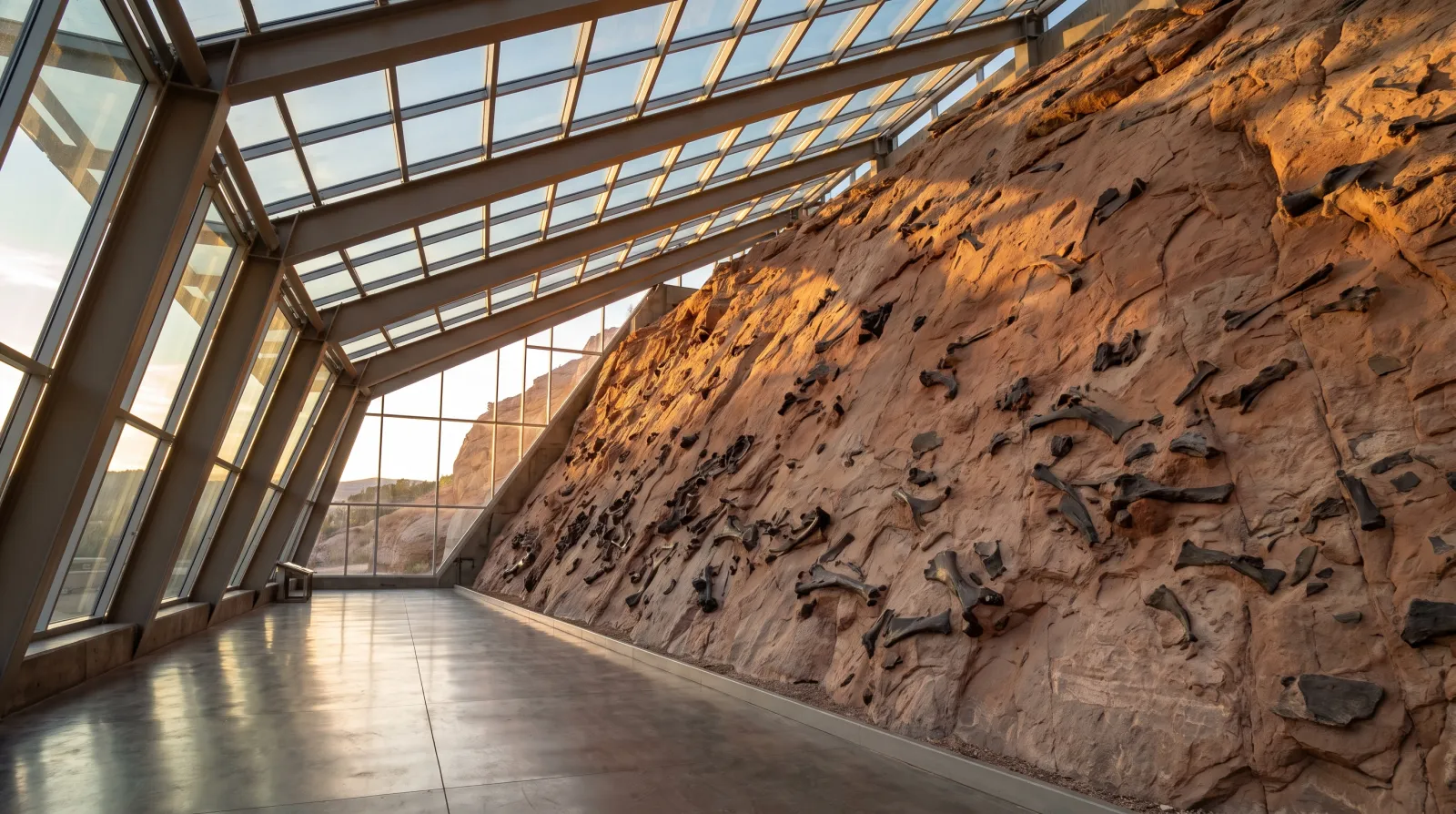
The Wall of Bones: Utah's Quarry Where 1,500 Dinosaurs Are Still in the Rock
Near Jensen, a two-story cliff face inside the Quarry Exhibit Hall holds roughly 1,500 dinosaur bones still locked in 150-million-year-old rock — and at one marked spot, you're allowed to touch one.
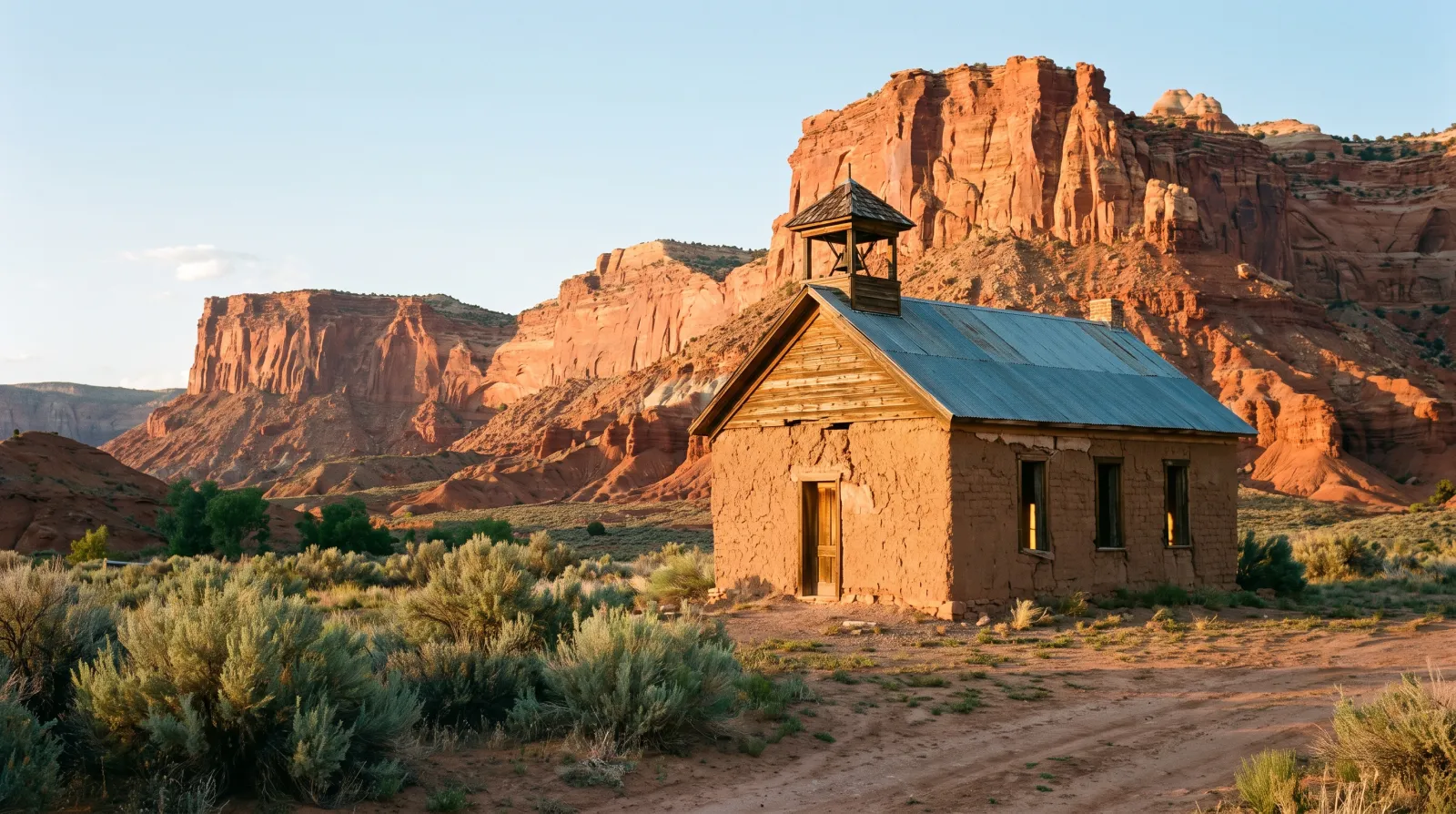
Grafton, Utah: The Ghost Town Below Zion That Refused to Stay Buried
Grafton is a preserved pioneer ghost town on the Virgin River, two miles off the road most Zion visitors never leave. Often called the most photographed ghost town in the West, it's also the unnamed backdrop of Butch Cassidy and the Sundance Kid.
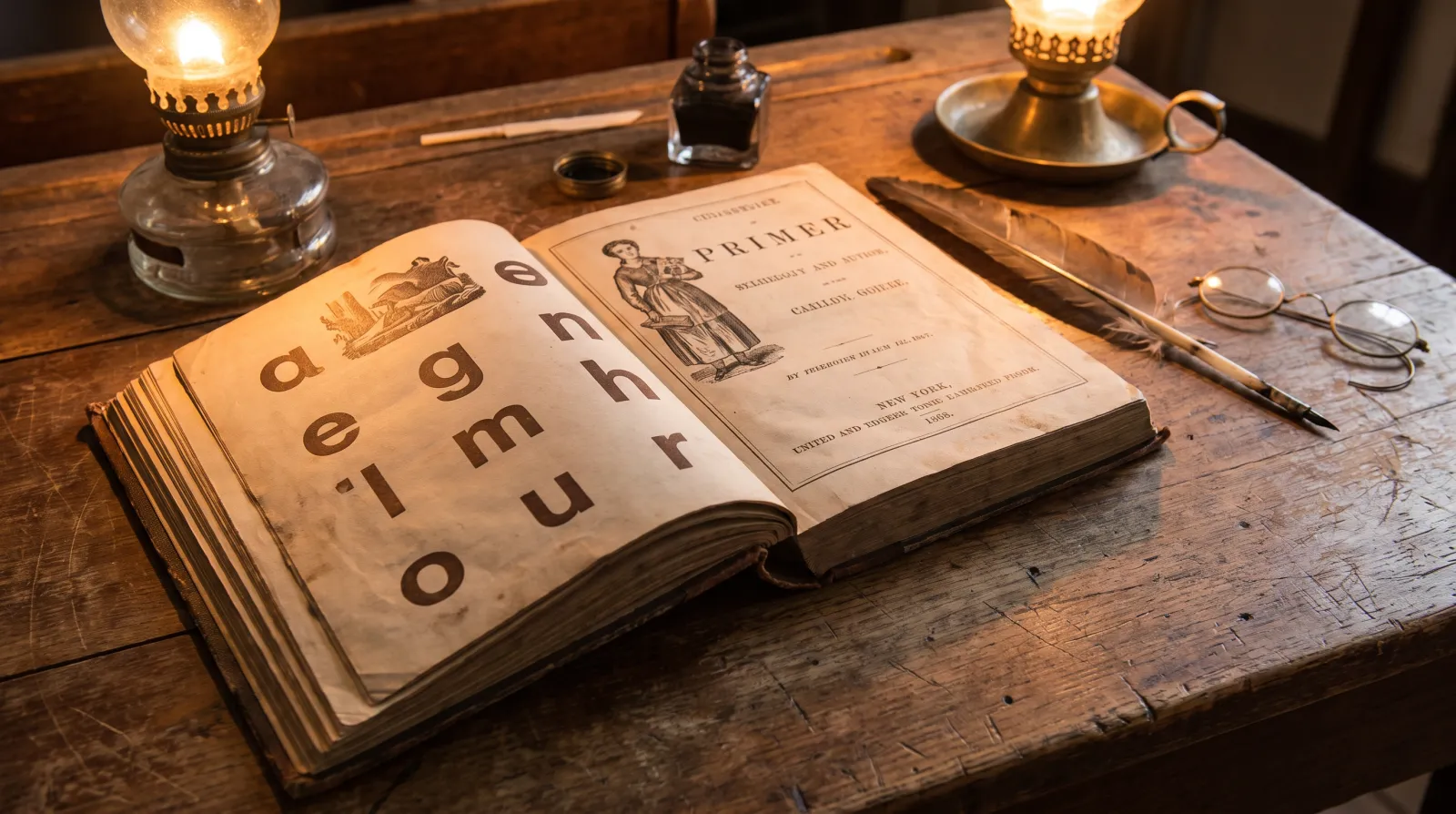
The Alphabet Utah Invented to Replace English
In 1854, Utah's territorial leaders adopted a 38-character phonetic alphabet meant to replace standard English spelling. They printed schoolbooks and a full Book of Mormon in it before the whole project quietly died.