Pando: The 106-Acre Utah Forest That's Secretly One Tree — and the Heaviest Living Thing on Earth
By Utah Untamed Editorial · Published
Pando, in Utah's Fishlake National Forest, looks like a forest of roughly 47,000 quaking aspens. It is actually one tree: every trunk grows from a single shared root system, making it the heaviest known living organism on Earth at close to 13 million pounds. It covers 106 acres near Fish Lake on State Highway 25, is free and open year-round to walk, and — despite its size — it is in decline because mule deer eat its young shoots before they can grow.
What looks like a forest of roughly 47,000 aspen trees in central Utah is actually one tree. Pando, in Fishlake National Forest, is a single quaking aspen whose trunks all grow from one shared root system, which makes it the heaviest known living organism on the planet at close to 13 million pounds. You can walk through the whole thing in an afternoon and never realize you spent the entire time inside one organism.
The name is Latin for “I spread,” and that’s exactly what it does. A quaking aspen doesn’t have to reproduce by seed. It sends up new trunks — called stems, or ramets — directly from its roots, cloning itself sideways across the landscape. Every one of Pando’s stems is genetically identical to the next. They share DNA, they share water and sugars through the root network, and when a beetle or a hard winter kills one trunk, the organism underneath it doesn’t die. It just sends up another.
How big is Pando, really
Pando covers about 106 acres in the Fish Lake basin of Sevier County, roughly a mile southwest of Fish Lake on State Highway 25. That’s somewhere around 80 football fields of trembling aspen, all of it one tree.
The numbers are the part that stops people. Over 40,000 individual trunks, commonly estimated at about 47,000. An estimated 13 million pounds of wood, bark, leaves, and root mass — which is why it carries the title of heaviest known living organism, beating out the giant sequoias and the sprawling fungal mats that compete for “largest” by other measures. A single trunk is ordinary. A blue spruce out-tops it. But add up every trunk and the root mat tying them together, and nothing else we’ve found weighs more.
Most visitors walk in expecting something that looks like a champion tree — one massive trunk you stand under for a photo. Pando isn’t that. It’s a normal-looking aspen stand, pale bark and shivering leaves, that happens to be a single continuous creature. The wonder is in what you can’t see: the roots underfoot, knitting 47,000 trunks into one.
Why they call it the Trembling Giant
Quaking aspen leaves hang from a flattened stem, the petiole, set at an angle to the leaf blade. That little structural quirk means the leaves pivot and flutter in the lightest breeze when most leaves would sit still. Multiply that by tens of thousands of trunks and you get the sound Pando is named for — a soft, continuous rustle moving through the canopy even on a calm day. “Trembling Giant” is the nickname, and standing inside it on a still afternoon, you understand it.
How old is Pando — and why nobody can give you a straight number
Here’s where the honest version matters. You will see Pando called 80,000 years old, 14,000 years old, 9,000 years old, and “one of the oldest living things on Earth,” often in the same paragraph somewhere. The truth is that nobody knows, and the estimates disagree by a lot.
What’s solid: the individual trunks live around 130 years, give or take. Those are just the current generation of stems. The organism — the root system that keeps sending them up — is far older, because it has been cloning itself continuously the entire time. Estimating that root age is genuinely hard. There’s no trunk to core, no clean set of rings to count. Researchers have to model it from the rate the clone spreads or from the slow accumulation of mutations in its DNA, and those methods land in different places. Common figures put it somewhere in the range of 9,000 to 14,000 years, dating its start to the end of the last ice age. More recent work modeling its mutations has floated a much wider window — 16,000 years on the low end and as much as 80,000 on the high end.
So the accurate answer is that Pando is ancient, almost certainly thousands of years old at minimum, possibly far older — and any single confident number you read should be taken as one estimate among several, not settled fact. That uncertainty is part of what makes it fascinating, not a reason to round up to the scariest figure.
How we figured out it was one tree
For most of its life nobody knew Pando was a single organism. It was just a nice aspen stand by the lake. Forest researchers Burton Barnes and others documented the clone in the 1970s. In 1992 a University of Colorado team — Michael Grant, Jeffrey Mitton, and Yan Linhart — re-examined it, argued it was one connected male clone based on its uniform traits, and gave it the name Pando. Genetic sampling led by Utah State University molecular ecologist Karen Mock and colleagues later confirmed it: the trunks really are one genetic individual.
Recognition followed the science. In 2006 the U.S. Postal Service featured Pando on a stamp as one of its “40 Wonders of America.” A clone of aspens by a Utah lake had become a national landmark.
The heaviest living thing on Earth is dying
This is the part that doesn’t make the postcards. Pando is in decline, and has been for decades.
The problem is regeneration. For an organism that survives by replacing its trunks, Pando isn’t replacing them anymore. Aerial photos spanning more than 70 years show the canopy thinning and gaps widening as old stems die and few young ones grow up to take their place. A peer-reviewed study found the chief culprit is browsing: mule deer, and to a lesser extent cattle, eat the tender new shoots almost as fast as the tree sends them up. The deer linger in Pando partly because hunting pressure is low near the developed lakeside and the predators that once moved them along are largely gone. Every shoot that gets nipped is a trunk that never grows.
Insects and disease pile on. Bark beetles, plus root rot and cankers, attack the older overstory trunks, weakening and killing the very stems that aren’t being replaced. A tree that can’t make new trunks while it’s losing old ones gets smaller. Left unchecked, the science is blunt about where that leads — a shrinking clone, or eventually a die-off.
There is a working fix, and it’s almost comically simple: keep the deer out. Where the Forest Service fenced sections off, the young stems came roaring back. Eight-foot fences around portions of Pando have produced the strongest regeneration anywhere in the clone. The catch is that fencing the entire 106 acres is expensive, fences fail, and a tree that needs a permanent fence to survive raises hard questions about what “wild” even means here. The Forest Service, Utah State researchers, and the nonprofit Friends of Pando are testing fencing, shoot-stimulation treatments, and monitoring plots to find a version that lasts. It is one of the more unusual restoration problems in American forestry: how to save one tree the size of a neighborhood.
What it’s actually like to visit
Pando is free, open year-round, and self-guided. There’s no entrance booth and no champion-tree viewpoint — the experience is walking among the trunks and knowing what you’re standing in.
You’ll find it in the Fish Lake basin in central Utah, about a mile southwest of Fish Lake along State Highway 25, near the Doctor Creek Campground area, where there’s parking, a restroom, and an interpretive sign. The clone straddles the highway, so part of the magic is realizing the aspens on both sides of the road are the same creature. Friends of Pando has mapped walking routes through the grove if you want a structured loop.
Summer is the easy season: the highway and basin are open, the leaves are full and green, and the temperatures up at elevation are a relief from the desert below. Late September into early October brings the gold, and with it the crowds and the cars pulled over on the shoulder. If you want Pando quiet, go now, in the green. Walk slowly, listen for the trembling, and remember that everything around you — every trunk in every direction — is one life.
Frequently Asked Questions
What is Pando? add
Pando is a single quaking aspen (Populus tremuloides) in Utah's Fishlake National Forest whose roughly 47,000 trunks all grow from one shared root system. Although it looks like a forest, it is one genetic organism, and at close to 13 million pounds it is the heaviest known living thing on Earth. The name is Latin for "I spread."
Where is Pando located? add
In central Utah, in the Fish Lake basin of Fishlake National Forest in Sevier County, about one mile southwest of Fish Lake on State Highway 25, near the Doctor Creek Campground. It is roughly a three-hour drive south of Salt Lake City.
Is Pando really one tree? add
Yes. Its trunks are genetically identical and connected underground by a single root system, which is the definition of one clonal organism. Genetic sampling led by Utah State University researchers confirmed the stems are one individual rather than a stand of separate trees.
How old is Pando? add
Its individual trunks live about 130 years, but the root system is far older and its exact age is unsettled. Estimates range widely — commonly 9,000 to 14,000 years, with some recent models suggesting anywhere from 16,000 to 80,000 years. It is certainly ancient, but no single age figure is confirmed.
Why is Pando dying? add
Pando is failing to regenerate. Mule deer and cattle eat its young shoots before they can grow into trunks, while bark beetles and disease kill the aging older trunks. Fencing deer out of sections has restored strong new growth, and the Forest Service and Friends of Pando are testing protections across the clone.
Can you visit Pando? add
Yes. Pando is free, open year-round, and self-guided, with parking, a restroom, and an interpretive sign near Doctor Creek Campground off State Highway 25. Summer offers a full green canopy; late September to early October brings peak fall color.
Keep Exploring
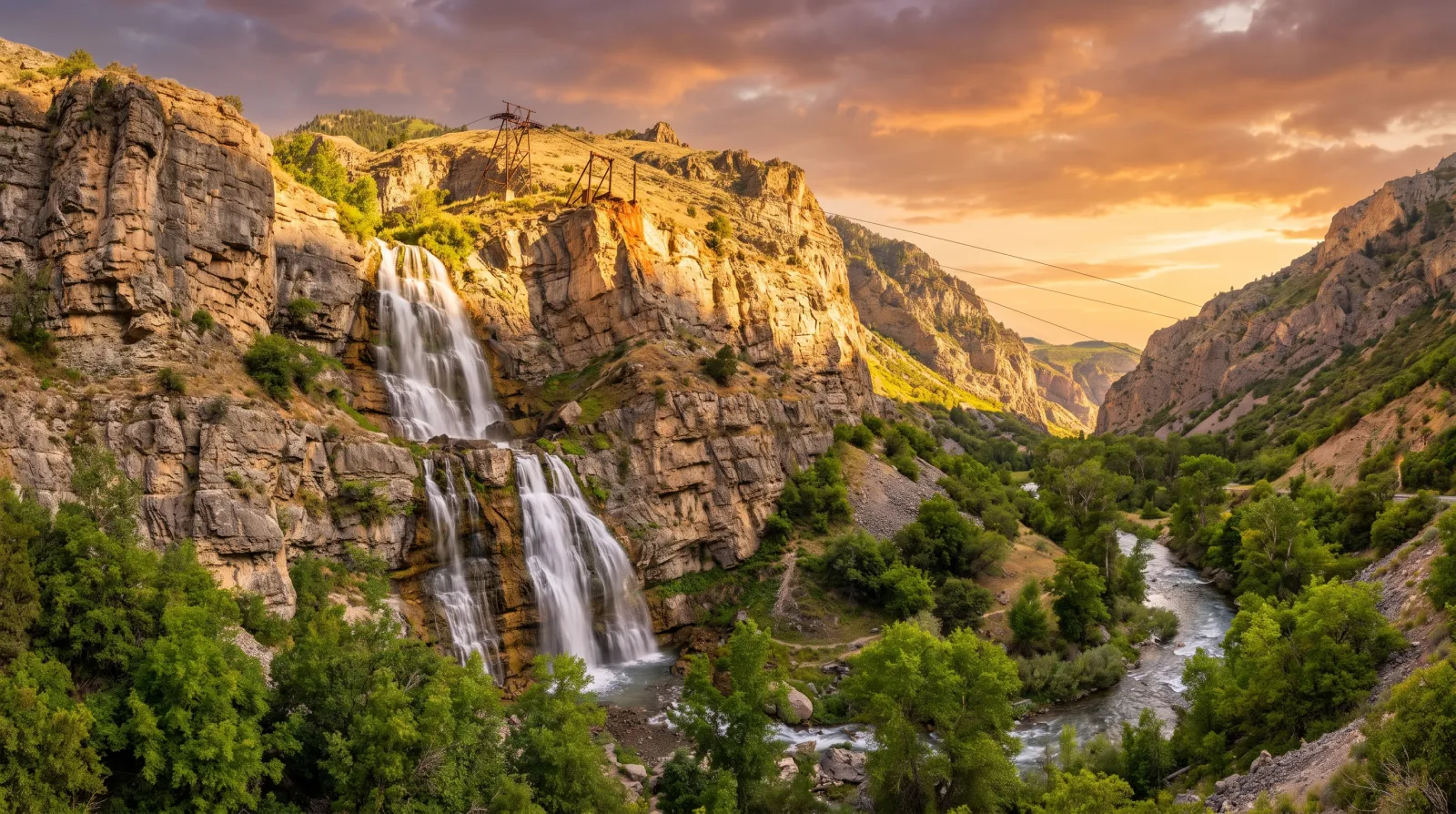
The Utah Waterfall That Used to Have a Restaurant on Top of It
Bridal Veil Falls in Provo Canyon is a 607-foot double cataract you can walk right up to on a paved trail. For 35 years, a cliffside tram climbed beside it to a restaurant and dance hall that burned, slid, and finally came down for good.
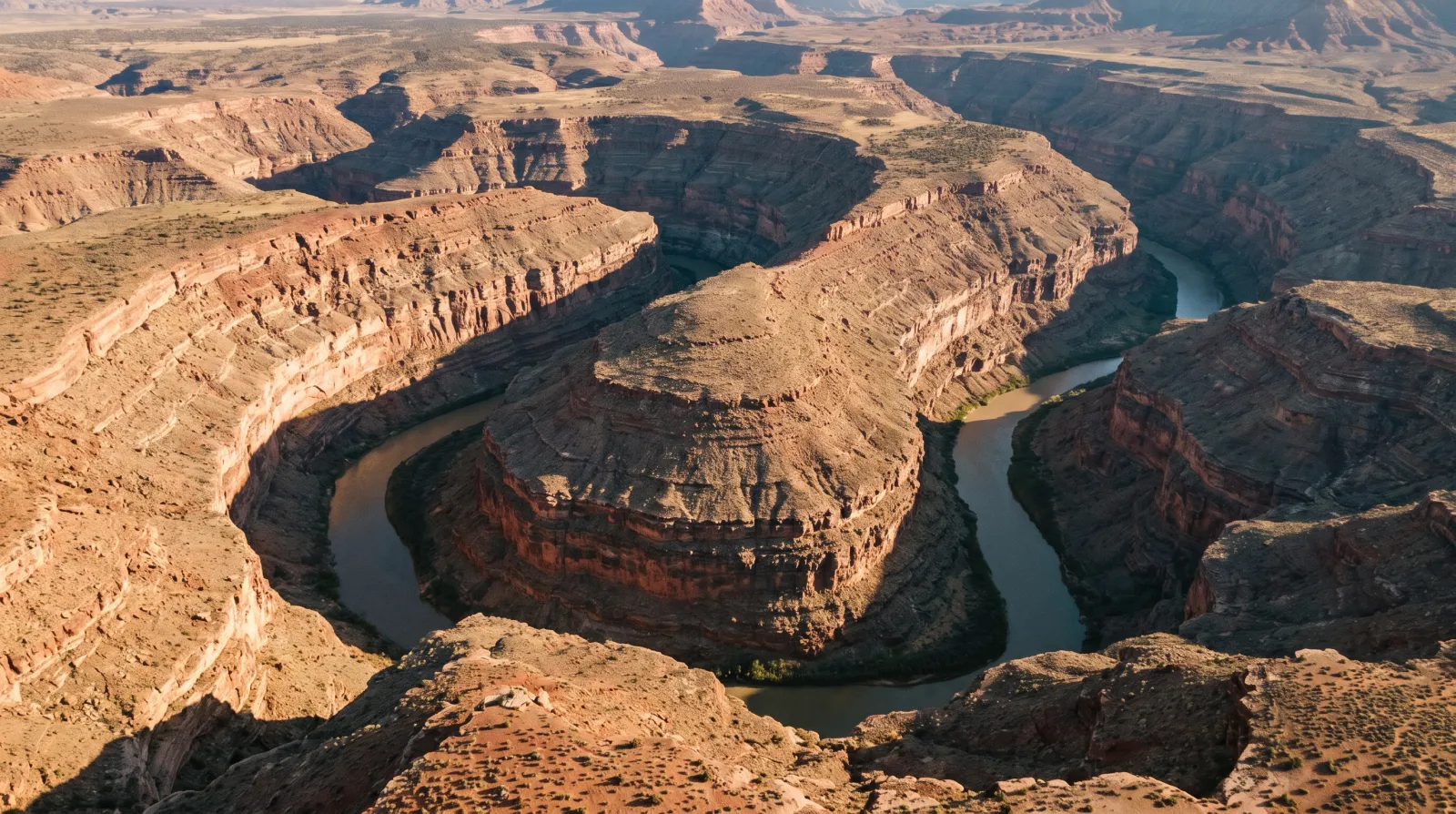
Goosenecks State Park: Where the San Juan River Goes Six Miles to Get One and a Half
At Goosenecks State Park, you stand a thousand feet above the San Juan River and watch it wind more than six miles through three stacked canyon loops just to move a mile and a half downstream — the finest entrenched meander on Earth, for five dollars a car.
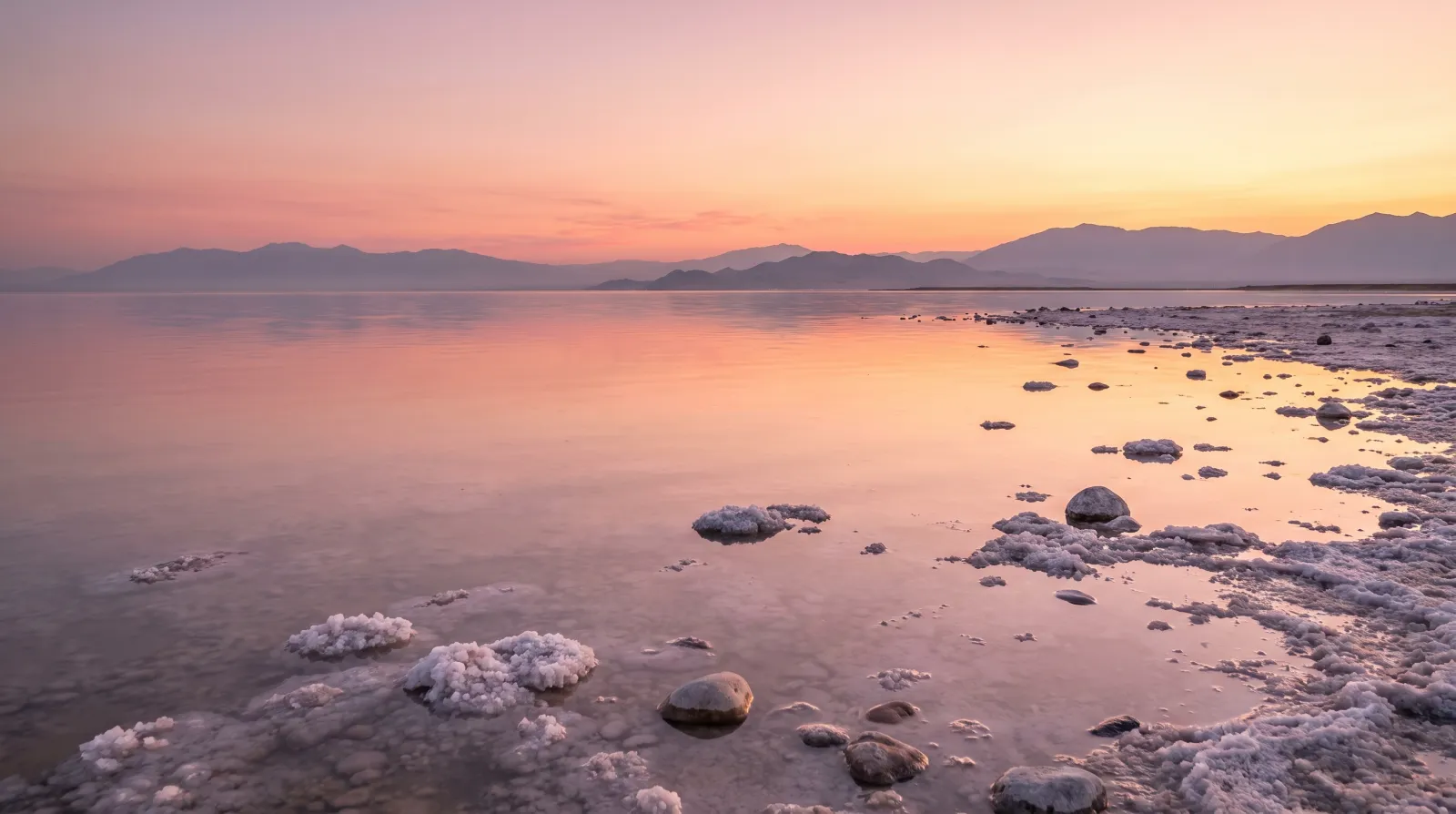
The Sea-Monkeys Were Real, and They Came From Utah
The Sea-Monkeys from the back of the comic book were brine shrimp, and the Great Salt Lake supplies close to 45% of the world's wild supply — a $60-million winter harvest that feeds fish farms from Norway to Ecuador.