Hole N" The Rock: The 5,000-Square-Foot Home One Man Blasted Into a Moab Cliff
By Utah Untamed Editorial · Published
Hole N" The Rock, about 12 miles south of Moab on US-191, is a 5,000-square-foot, 14-room home that Albert Christensen carved by hand and dynamite into a sandstone cliff over roughly twelve years, moving his family in by 1952. He died in 1957 before finishing it. The site now includes a trading post and a petting zoo with camels and zebras, and a weathered bas-relief of Franklin D. Roosevelt on the cliff outside survives from a larger monument Christensen was never allowed to complete.
Hole N” The Rock is a 5,000-square-foot home with fourteen rooms carved directly into a solid sandstone cliff on U.S. Highway 191, about 12 miles south of Moab — and yes, it is exactly what the giant white letters on the rock say it is. A local named Albert Christensen spent twelve years drilling and blasting the rooms out by hand, moved his family in, and turned the place into a diner and a home before he died in 1957. His family opened it for tours, and the rooms he carved are still there, more or less as he left them, behind a trading post and a petting zoo you can pull into any day of the week.
If you have driven south from Moab toward the Needles district of Canyonlands, Monticello, or Blanding, you have seen it. The letters are four stories tall and painted straight onto the cliff face. Most people slow down, read the sign, decide it’s a tourist trap, and keep going. They are missing one of the strangest and most sincere pieces of do-it-yourself architecture in the American West.
Who built Hole N” The Rock
The story starts with the Christensen family, who homesteaded this stretch of red rock between Moab and Monticello in the early twentieth century. Albert Christensen and his brother Leo first hollowed out a shallow cave in the cliff to give cattle crews a patch of shade and a rough place to sleep while pushing herds through the country. That was the seed. The cave was practical, and it was small.
Albert wanted something else. He had trained as a painter and sculptor, worked as a cook, and carried the kind of ambition that doesn’t fit a rented room. Around 1940 he started drilling into the sandstone in earnest, blasting and hand-chiseling room after room out of the cliff. He worked at it for roughly twelve years. By the time he and his wife Gladys moved in with their family in 1952, he had pulled an estimated 50,000 cubic feet of rock out of the formation — the weight of it measured in dump trucks, not wheelbarrows.
He wasn’t building a novelty. He was building a house he intended to live in, and he did.
What’s actually inside
Fourteen rooms open off a floor plan organized around thick stone pillars Albert left in place to hold up the ceiling — the same trick a mining engineer uses underground, done here for a living room. He carved shelving straight out of the walls so it could never be moved. There’s a deep-fat fryer set into the stone from the diner days, a bathtub built into the rock, and a fireplace with a chimney that runs 65 feet straight up through solid sandstone to vent at the top of the cliff.
The temperature is part of the point. Rock is a slow, heavy insulator, so the interior holds steady while the desert outside swings from freezing nights to triple-digit afternoons. On a scorching July day in Moab, the coolest room you’ll stand in might be the one a diner cook dynamited out of a hill.
Albert died in 1957 with the house still unfinished. He is buried on the property.
The president carved into the cliff
Walk the grounds and you’ll find a face looking back at you from the sandstone: a bas-relief portrait of Franklin D. Roosevelt that Albert carved into the cliff outside his home. It’s the surviving piece of a much larger idea. Albert had planned a grand tribute — accounts describe it as a “unity” monument meant to honor Roosevelt alongside his 1940 opponent, Wendell Willkie, set into a natural sandstone amphitheater near the house.
The full monument never happened. By the reporting that survives, Albert had started shaping his design on land that turned out to be public, and the federal government told him to stop. What’s left is the single weathered portrait of FDR, carved by a self-taught sculptor who wanted to put something permanent into the rock and got told how far he could go. It is one of the more unexpected presidential monuments in the country, and it sits a few feet from a petting-zoo fence.
From cattle cave to camels
The diner came before the tours. Albert and Gladys opened the Hole N” The Rock diner in 1945, feeding travelers on the lonely highway between Moab and Monticello, and ran it until about 1955. After Albert’s death, Gladys kept the place alive — she opened a gift shop, gave tours of the home she still lived in, and worked the site until she passed away in 1974.
Ownership passed to Gladys’s son, Hub Davis, who held it until 2000, when new owners bought the property. They made a decision that matters: they left the carved home essentially as the Christensens had lived in it, and built the modern attraction around it rather than through it. The house is the museum. Everything else grew up outside the front door.
That “everything else” is a lot. A trading post stocked with Native American pottery, jewelry, and Southwest gifts. A general store. Yard sculptures welded out of scrap metal. And a petting zoo whose roster reads like a mistake — camels, zebras, emus, wallabies, alpacas, peacocks, goats, and albino raccoons, living out their days a dozen miles from the entrance to Canyonlands.
Is Hole N” The Rock worth stopping for?
If you like the roadside oddity — the sincere, handmade, slightly bizarre kind, not the plastic kind — this is one of the best in Utah. The house tour is short, roughly ten to fifteen minutes, and it is the real reason to stop. Standing inside rooms a single person carved out of a cliff with hand tools and dynamite does something a photo can’t. The petting zoo and trading post are the garnish. The house is the meal.
It also lands at a useful spot on the map. Hole N” The Rock sits directly on the drive south from Moab toward the Needles district of Canyonlands, the Manti-La Sal high country, and the highway to Monticello and Blanding. If you’re headed that way in summer, it’s a natural leg-stretch, a shot of shade, and a bathroom stop attached to a genuinely strange story.
Plan your visit
The site sits on U.S. Highway 191, roughly 12 miles south of Moab. You cannot miss it — look for the four-story letters on the cliff. Hours shift by season, and the house tour and petting zoo carry separate admission, so it’s worth calling ahead or checking current rates before you build a schedule around it. Thirty minutes to an hour covers the tour, the trading post, and the zoo — it’s a stop, not a day. The interior stays cool when the pavement is baking, which makes it a smart midday break on a hot Moab-to-Needles run. Save the exposed trails and overlooks for early morning and evening; duck into the rock when the sun is high.
Frequently Asked Questions
Is the house at Hole N" The Rock really carved into the rock? add
Yes. All fourteen rooms were drilled and blasted out of a single sandstone cliff by hand. It is a genuine excavated dwelling, not a facade built against the rock.
Who built Hole N" The Rock and when? add
Albert Christensen began the modern home around 1940 and worked on it for about twelve years. He and his family moved in during 1952. He kept carving until his death in 1957.
How far is Hole N" The Rock from Moab? add
Roughly 12 miles south of Moab on U.S. Highway 191, on the way toward Monticello and the Needles district of Canyonlands.
Is Hole N" The Rock worth visiting? add
For the roughly ten-minute house tour alone, yes, if handmade roadside history is your thing. It's an easy stop on a Moab road trip rather than a destination in itself, and the stone interior stays cool on a hot day.
Keep Exploring
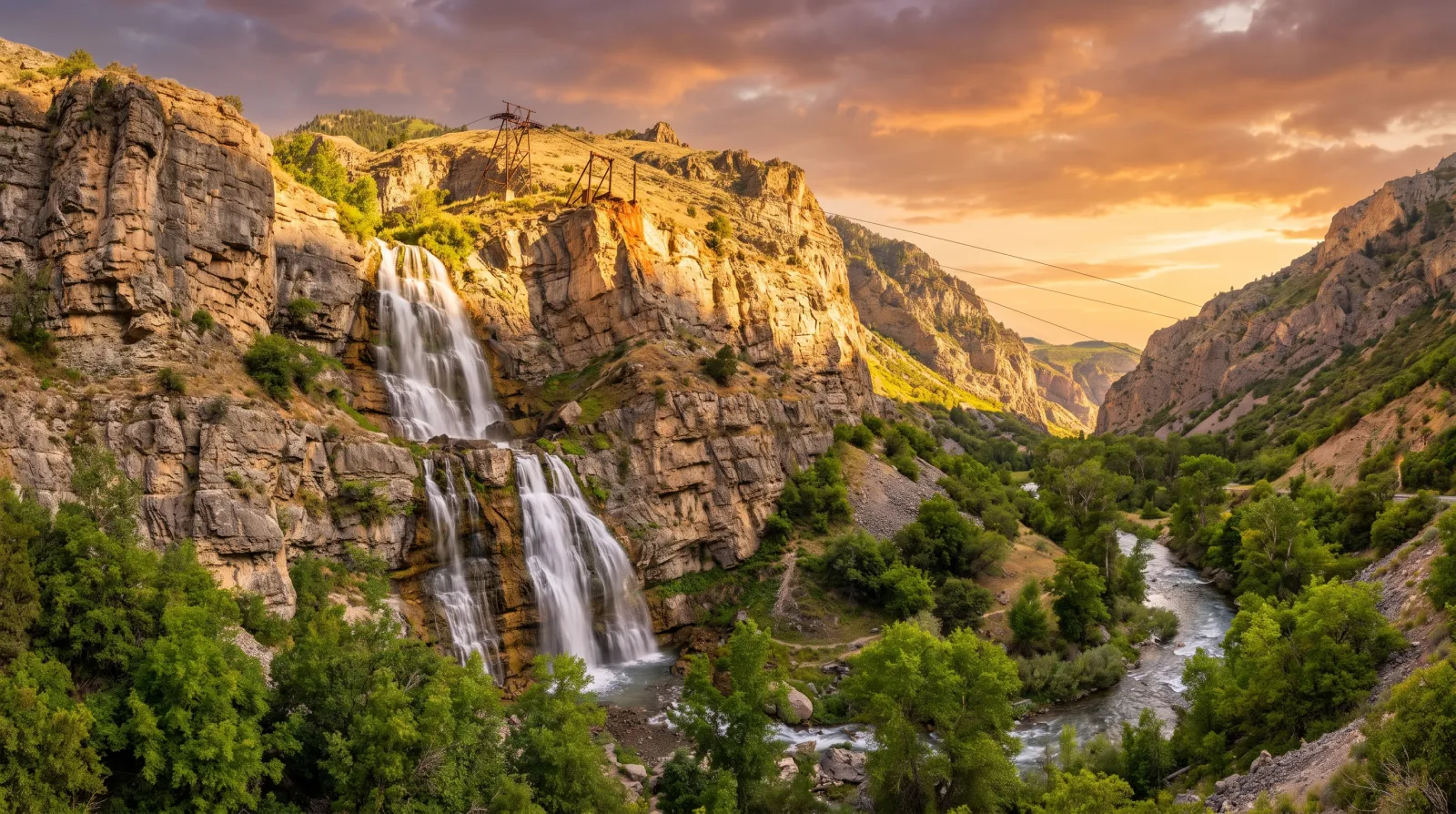
The Utah Waterfall That Used to Have a Restaurant on Top of It
Bridal Veil Falls in Provo Canyon is a 607-foot double cataract you can walk right up to on a paved trail. For 35 years, a cliffside tram climbed beside it to a restaurant and dance hall that burned, slid, and finally came down for good.
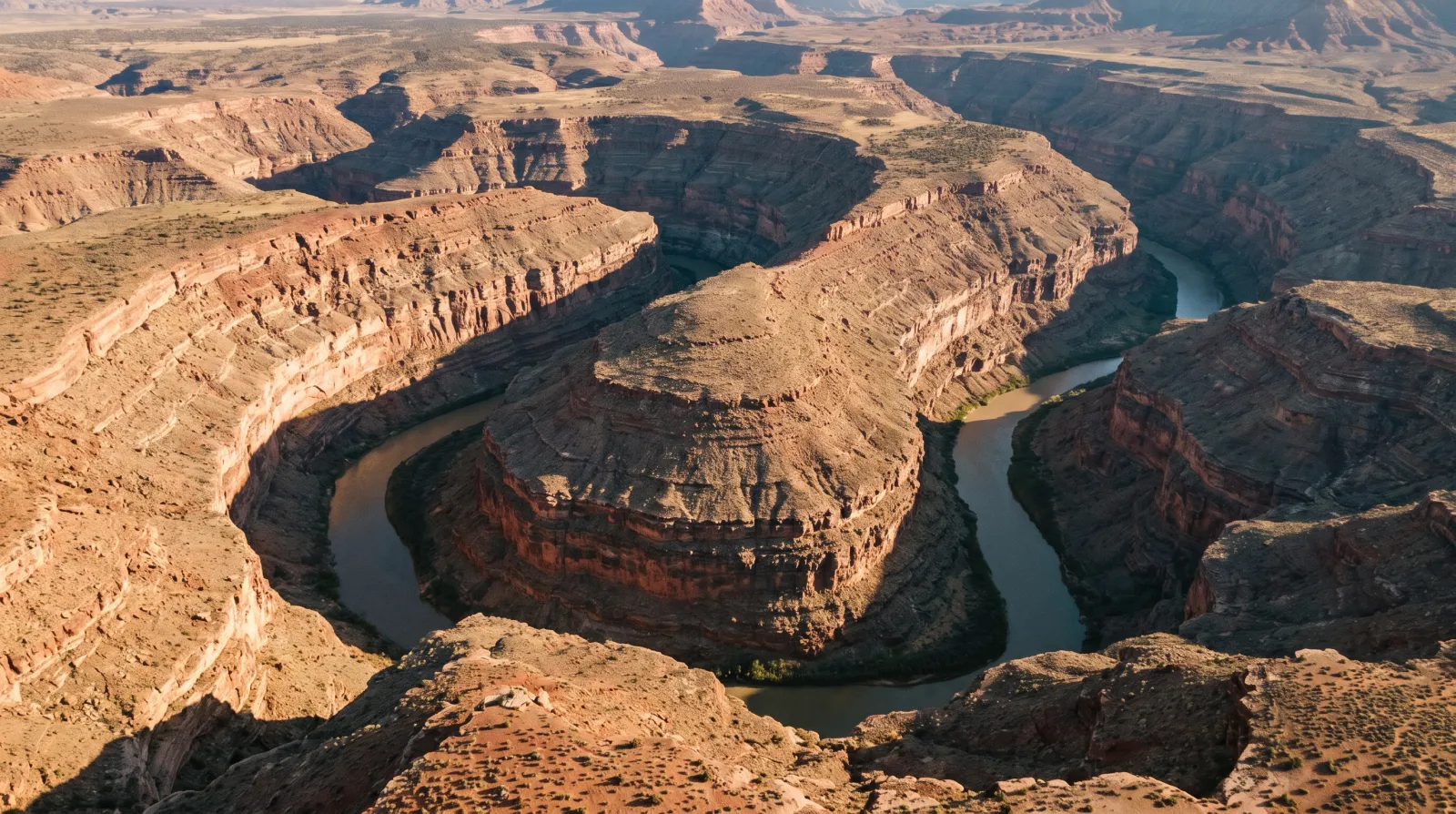
Goosenecks State Park: Where the San Juan River Goes Six Miles to Get One and a Half
At Goosenecks State Park, you stand a thousand feet above the San Juan River and watch it wind more than six miles through three stacked canyon loops just to move a mile and a half downstream — the finest entrenched meander on Earth, for five dollars a car.
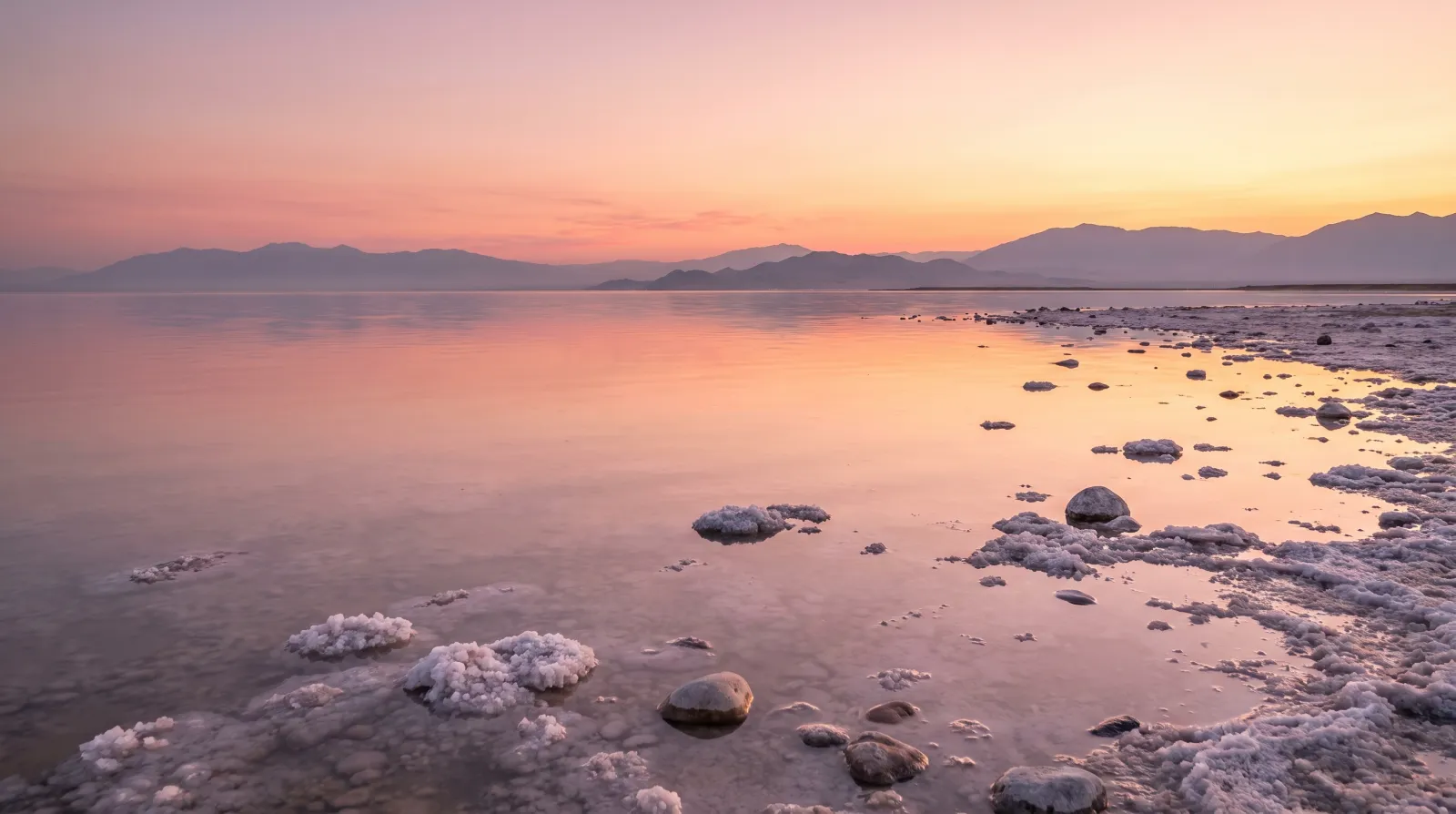
The Sea-Monkeys Were Real, and They Came From Utah
The Sea-Monkeys from the back of the comic book were brine shrimp, and the Great Salt Lake supplies close to 45% of the world's wild supply — a $60-million winter harvest that feeds fish farms from Norway to Ecuador.