You Can Pick Your Own Fruit Inside a Utah National Park
By Utah Untamed Editorial · Published
Capitol Reef National Park's Fruita Historic District preserves roughly 1,900 heirloom fruit trees planted by Latter-day Saint pioneers starting in 1880. When an orchard is ripe, the park posts a "U-Pick Fruit" sign and visitors can pick apricots, cherries, peaches, pears, apples, or plums, then pay on the honor system at a self-service scale and pay pipe. Weather can drastically shrink a given year's harvest, so calling the park's fruit hotline before visiting is essential.
Yes — Capitol Reef National Park lets you pick and eat fruit straight off the trees in its historic Fruita orchards, and you pay for what you carry out on the honor system. Roughly 1,900 heirloom apricot, cherry, peach, pear, apple, and plum trees grow a mile or two from the visitor center, planted by pioneers starting in 1880 and still watered by the ditches those pioneers dug. When a block is ripe, park staff post a “U-Pick Fruit” sign, hand you a ladder and a long-handled picker, and let you go.
This is the thing most people drive right past. Capitol Reef is the quietest of Utah’s Mighty Five, and the crowds that do come are usually chasing the Waterpocket Fold, the Scenic Drive, and the slot canyons. They don’t realize the green stripe along the Fremont River is one of the largest historic orchards left in the National Park System — a working farm the government maintains as a piece of living history you’re allowed to eat.
What Fruita is, and how it got there
Fruita sits where the Fremont River cuts through the red rock, a rare ribbon of water and shade in a hard, dry country. Latter-day Saint families settled it in 1880 and first called the place Junction, for the spot where Sulphur Creek meets the Fremont. The name didn’t last. The soil and the river were so good for fruit that the town renamed itself Fruita, and locals started calling it “the Eden of Wayne County.”
Never more than about ten families lived here at once. They planted thousands of trees — apricots, cherries, peaches, pears, apples, plums, plus mulberry, almond, and walnut — and the harvest was both dinner and paycheck. Fruit went out by wagon to mining camps and nearby towns. The last resident sold to the National Park Service in 1969, and rather than let the orchards go back to sagebrush, the Park Service kept them alive. Today the whole settlement — orchards, the one-room schoolhouse, the Gifford farmhouse, the barns and fences — is protected as the Fruita Rural Historic Landscape on the National Register of Historic Places, about 100 acres of orchards and pasture held in the shape the pioneers left it.
The part that surprises everyone: you pick it yourself
There are 19 orchards, and they don’t all ripen at once — that was the point. A family that grew cherries, apricots, peaches, and apples had fruit and income spread across months instead of one frantic week. That staggered calendar is still how it works for visitors.
When an orchard is open, you’ll see the “U-Pick Fruit” sign at the gate. Grab a ladder and one of the provided fruit pickers, fill a bag, and carry it to the self-pay station near the entrance — a scale, a price sign, and a pipe you drop your money into. Weigh your fruit, do the math, pay on your honor. Every dollar goes back into keeping the orchards alive. You can also wander any orchard, ripe or not, and eat what you pick while you’re standing inside it for free; you only pay for fruit you carry out.
A few rules keep the trees alive for the next hundred years. Never climb the trees — that’s what the ladders are for. Fenced orchards are open 9 a.m. to 5 p.m.; unfenced ones run dawn to dusk. Leashed dogs are welcome. And don’t touch the little traps and twist-ties hanging in the branches — those are pheromone dispensers the park uses to control pests without spraying.
When to come for what
The Park Service publishes a harvest calendar, and it’s the number to plan around — with one honest caveat below.
Cherries and apricots ripen first, in late June into early summer. Peaches run late July into early September. Pears land early August to early September. Apples are the long finish, mid-August all the way to mid-October.
Here’s the caveat, and it’s the whole reason to call before you drive. These are heirloom trees on a wild river at 5,400 feet, and the weather runs the show. In 2025 an unusually early bloom got caught by hard spring freezes, and the park lost something like 80% of its fruit — most orchards never opened for U-Pick at all. Bloom and harvest can swing a couple weeks either way from the published ranges. So before you build a day around it, call the park’s fruit hotline: 435-425-3791, then press 1 for visitor information and 5 for the fruit line. The park also posts openings on its Facebook page. Five minutes on the phone saves you a two-hour drive to a closed gate.
The Gifford House, and the pie you’re actually here for
Even in a year the trees come up short, the Gifford Homestead delivers. The 1908 farmhouse, restored to look like a working Fruita home around 1900, runs a small shop out of the kitchen selling goods made from the same fruit the valley grows — pies, jams, cider, and ice cream. The mini fruit pies are the thing people line up for. They sell out. If you want one, come early; by mid-afternoon on a summer day the case can be bare.
The ditches are the real time machine
Look down while you’re picking. The water moving through the orchards runs in earthen furrows, gravity-fed off the Fremont River exactly the way the pioneers set it up in the 1880s — no pumps, no sprinklers, just ditches and grade. Park staff still open and close them by hand to flood-irrigate each block in turn. It’s one of the few places you can stand inside a 140-year-old irrigation system that’s still doing its job.
That old system is also why the orchards are fragile. Heirloom trees are less resistant to drought and disease than modern commercial stock, and since the park took over, the orchards have lost close to 1,000 trees to age, disease, and poor soil. So the Park Service has been replanting — 260 young peach trees went into the Guy Smith orchard in 2022, another 141 cherry and 70 apple trees into the Cook orchard in 2023, with more to come. Some of these varieties barely exist anywhere else; the park is effectively a seed vault you can taste. When you drop a few dollars in that pay pipe, that’s what it funds.
If you go
Capitol Reef sits on Highway 24 near Torrey, about 3.5 hours from Salt Lake City and a little over 2 hours from the Bryce Canyon area. There’s no entrance fee to reach the visitor center, Fruita, and the orchards; the fee only applies to the Scenic Drive past the Gifford House. Bring cash for the pay station and the pie shop, come in the cool of the morning in summer, and check the fruit hotline first. Then find an open orchard, prop a ladder against a hundred-year-old apricot tree under a thousand-foot red cliff, and eat one warm off the branch. There isn’t another national park in the country where that’s the assignment.
Frequently Asked Questions
Can you pick fruit at Capitol Reef National Park? add
Yes. When an orchard is ripe, park staff post a "U-Pick Fruit" sign and provide ladders and long-handled pickers. You weigh what you carry out at a self-pay station and pay on the honor system; fruit eaten while standing inside the orchard is free.
When is Capitol Reef's orchard harvest season? add
The National Park Service's published calendar runs roughly: cherries and apricots in late June into early summer, peaches from late July into early September, pears from early August to early September, and apples from mid-August to mid-October. Bloom and harvest timing can shift by weeks depending on weather, so call the park's fruit hotline before visiting.
How much does it cost to pick fruit at Capitol Reef? add
There's no entrance fee to reach Fruita and the orchards themselves. Picked fruit is weighed and paid for at a self-pay station on the honor system; bring cash.
What is Fruita, Utah? add
Fruita was a small Latter-day Saint farming settlement founded in 1880 along the Fremont River, now preserved inside Capitol Reef National Park as the Fruita Rural Historic Landscape. The last resident sold their land to the National Park Service in 1969, and the orchards have been maintained as living history ever since.
Keep Exploring
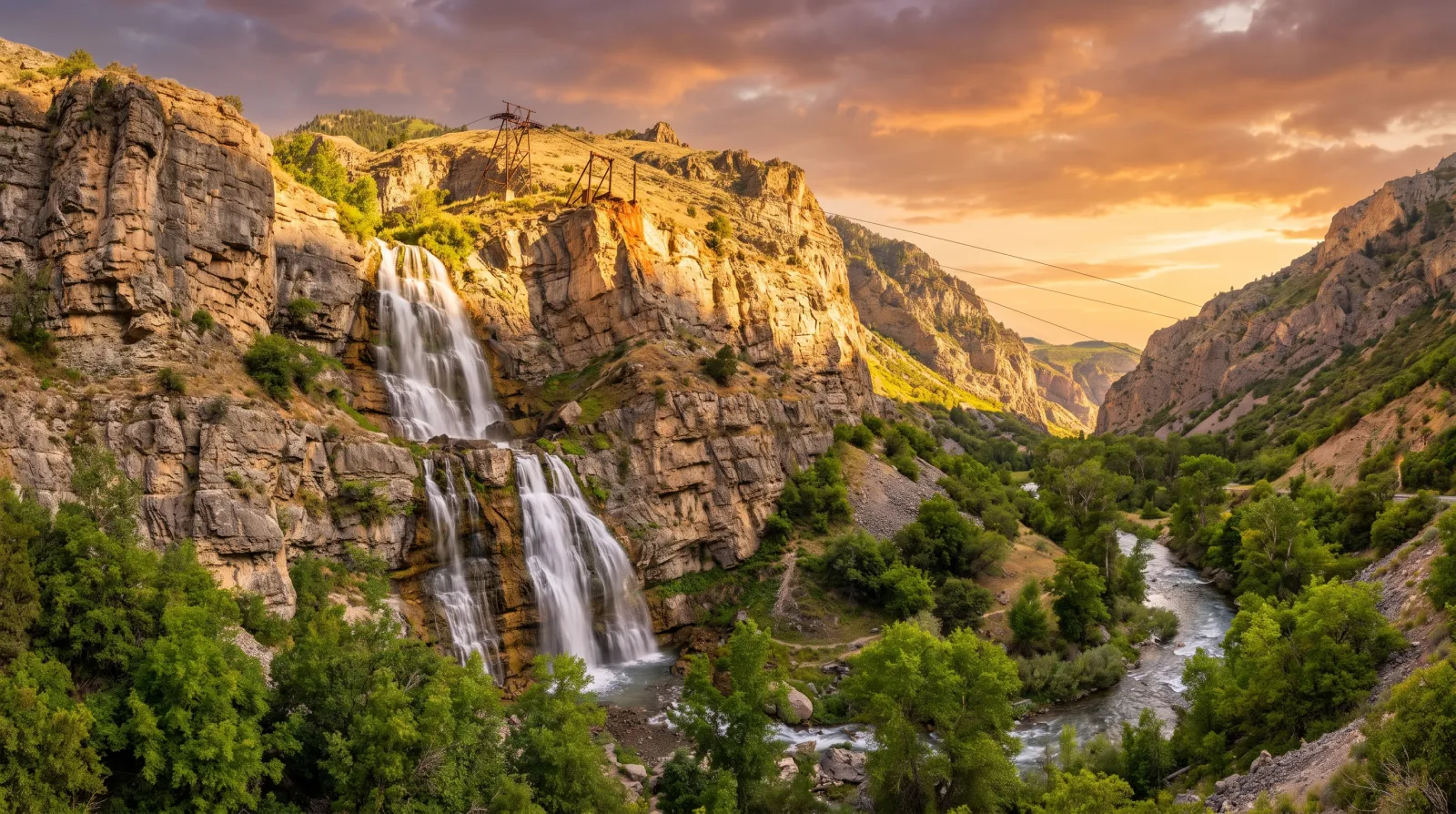
The Utah Waterfall That Used to Have a Restaurant on Top of It
Bridal Veil Falls in Provo Canyon is a 607-foot double cataract you can walk right up to on a paved trail. For 35 years, a cliffside tram climbed beside it to a restaurant and dance hall that burned, slid, and finally came down for good.
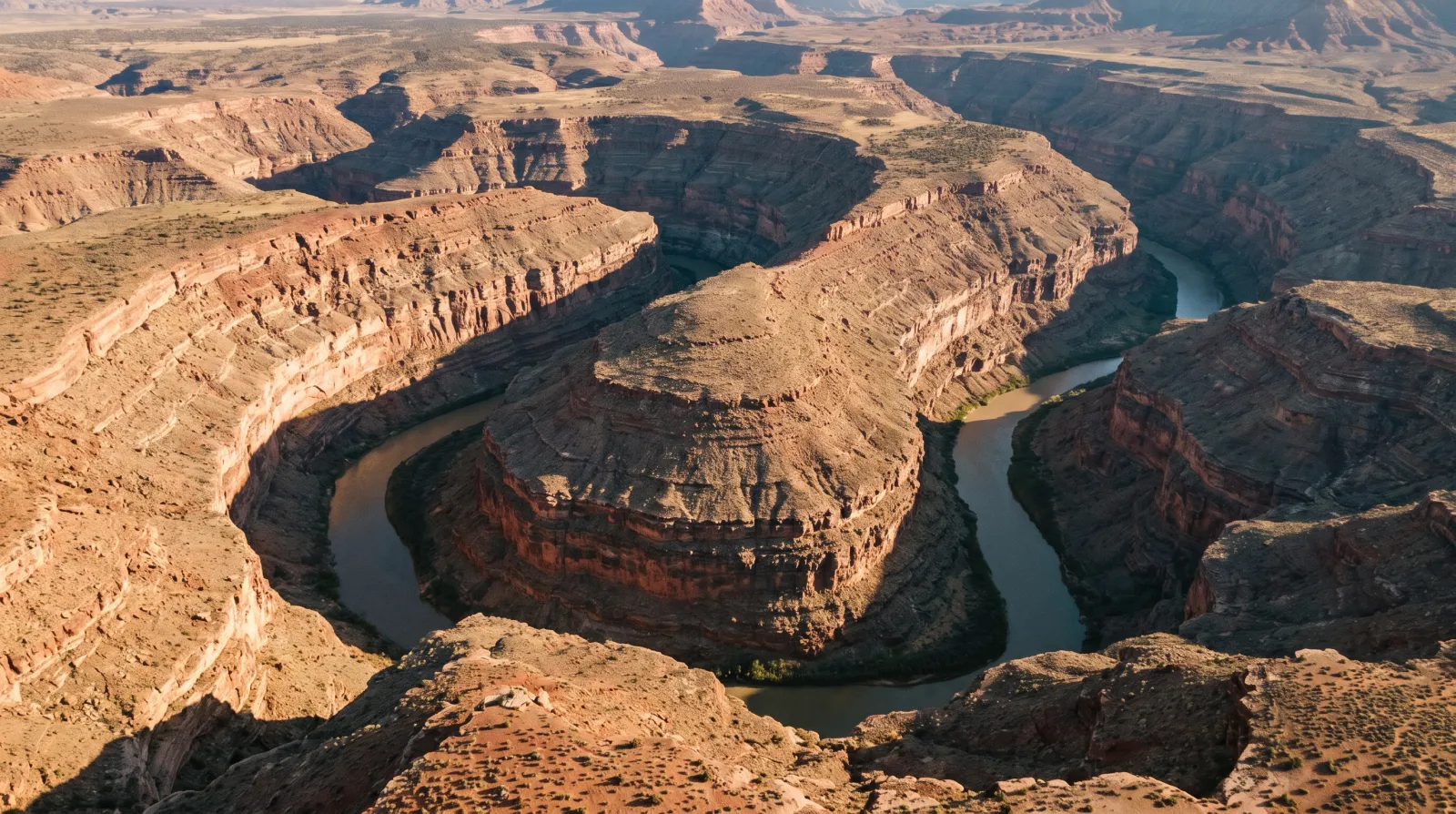
Goosenecks State Park: Where the San Juan River Goes Six Miles to Get One and a Half
At Goosenecks State Park, you stand a thousand feet above the San Juan River and watch it wind more than six miles through three stacked canyon loops just to move a mile and a half downstream — the finest entrenched meander on Earth, for five dollars a car.

The Sea-Monkeys Were Real, and They Came From Utah
The Sea-Monkeys from the back of the comic book were brine shrimp, and the Great Salt Lake supplies close to 45% of the world's wild supply — a $60-million winter harvest that feeds fish farms from Norway to Ecuador.