The Bonneville Salt Flats: America's Fastest Ground, and the Race to Save It
By Utah Untamed Editorial · Published
The Bonneville Salt Flats are a roughly 30,000-acre salt crust in Utah's west desert, left behind when Ice Age Lake Bonneville dried up. Racers have chased the world land speed record here since the 1930s — Gary Gabelich hit 622 mph in the Blue Flame in 1970, still the last outright record set at Bonneville. The salt has thinned by about a third in 60 years due to nearby potash mining, and a restoration effort is now pumping brine back onto the flats each spring.
The Bonneville Salt Flats are a 30,000-acre sheet of hard white salt in Utah’s west desert, about 120 miles west of Salt Lake City, and they are the fastest natural ground in America — the place where drivers have chased the world land speed record for nearly a century. The salt is flat enough and hard enough that a person can see the curve of the earth across it, and firm enough, when dry, to hold a jet-powered car traveling more than 600 miles an hour.
That is the short answer. The longer one runs back about 14,000 years, to a lake that no longer exists.
A lake the size of Lake Michigan, gone
Most of western Utah once sat under water. Lake Bonneville was an inland sea that, at its high stand, stretched roughly 325 miles long and 135 miles wide and ran more than 1,000 feet deep — about the size of modern Lake Michigan, covering a third of the state. When the climate warmed at the end of the last Ice Age, the lake shrank fast. The Great Salt Lake is what’s left of the deep part. The salt flats are what’s left of the shallow western arm, where the water evaporated and left its dissolved minerals behind as a crust.
That crust is mostly table salt. About 90 percent of it is ordinary sodium chloride, the same thing in your shaker. Near the center it’s close to five feet thick; out toward the edges it thins to less than an inch. Geologists have put the whole deposit at something like 147 million tons. Every spring a thin film of water floods the surface, dissolves the top layer, spreads it flat as the water moves, and then evaporates and re-hardens by summer. The flats resurface themselves, year after year, which is exactly why the racing surface stays so smooth.
Why it became a racetrack
People have been driving fast on the salt since 1912, but Bonneville became the place for speed in 1935, when British driver Sir Malcolm Campbell brought his Blue Bird out and topped 300 miles an hour. From the mid-1930s through about 1970, nearly every meaningful land speed record in the world was set on this salt.
The high-water mark came on October 23, 1970. Gary Gabelich drove a rocket car called the Blue Flame across the measured mile at 622.407 mph, the first car to crack 1,000 kilometers an hour. The Blue Flame ran on a natural-gas-and-peroxide rocket motor, carried about 20 seconds of fuel, and put down thousands of pounds of thrust. That run stood as the outright world record for 13 years, and it remains the last outright land speed record ever set at Bonneville.
Here’s the honest part. The record game has moved on. When Andy Green drove Thrust SSC past the sound barrier in 1997 — the first supersonic land speed record — he did it on the Black Rock Desert in Nevada, not here. The last three outright records were all set at Black Rock, because by then the cars needed more miles of runway than the Bonneville salt could reliably give. Bonneville is still the spiritual home of the sport and still hosts hundreds of record attempts in its own classes every year. It just isn’t where the single fastest number gets chased anymore. That has everything to do with the next part of the story.
The salt is running out
The flats are thinning. The salt crust has lost roughly a third of its thickness over the past 60 years, and the racing surface has shrunk from about 13 miles of usable track in past decades to about 8 miles today. For a sport where you need room to accelerate, brake, and survive, those missing miles are the whole game.
Scientists mostly agree on the cause: decades of potash mining next to the flats drew down the underground brine that feeds the salt. Federal leases starting in the 1960s pulled salt off Bonneville for mineral extraction, and for years almost none of it came back. A salt-laydown program began returning brine in 1997, but the amounts haven’t kept up with what was lost. A coalition of racers, the auto-parts industry group SEMA, the BLM, and the mining company Intrepid Potash now runs the “Restore Bonneville” effort, pumping salt brine back onto the flats each spring and aiming to raise the yearly total from around 300,000 tons toward more than a million. Whether it’s enough to rebuild the crust is still an open question the data is just starting to answer.
So the place is a paradox. It looks eternal — a blinding white plain that runs to the horizon in every direction — and it’s one of the more fragile landscapes in the state.
When to go, and what you’ll see
There are two completely different Bonnevilles depending on the season, and knowing which one you want is the difference between a great trip and a muddy one.
In winter and spring, snowmelt and rain leave a shallow sheet of water over the salt, and the flats turn into the largest natural mirror you will ever stand on. At sunrise, with no wind, the sky doubles and the mountains hang upside down in the water. This is the photograph everyone shares, and the only way to get it is to show up wet-season, early, and on foot. You cannot drive on the salt when it’s flooded — the surface goes soft, and people sink vehicles into the brine and ruin them every year.
In late summer and fall, the water is gone and the salt bakes hard. This is driving season and racing season. The big event is SCTA Speed Week, running August 1–7, 2026, when hundreds of cars and motorcycles — everything from streamliners to barely modified street cars — line up to run the measured mile. The SCTA World Finals follow in late September. If you want to watch people actually chase records, August is the week.
Plan a smart visit
Take Interstate 80 west from Salt Lake City toward Wendover, about a 90-minute drive, and follow the signs to the Bonneville Speedway exit and rest area. There’s a paved access road and a rest stop with restrooms; from there you walk out onto the salt.
There are no services on the flats. Bring water, fuel, sunscreen, sunglasses, and a hat — the salt reflects sun straight up, so people burn under their chin and the brim of their hat. It’s a day-use area; camping isn’t allowed on the flats themselves, though the BLM permits primitive camping on nearby lands like the Silver Island Mountains.
Stand out there long enough and the appeal makes itself obvious. It is one of the few places in Utah with no rock, no tree, no edge — just white ground, open sky, and the kind of silence that makes a 600-mile-an-hour record feel almost reasonable. Go while the salt is still deep enough to hold it.
Frequently Asked Questions
Can you drive on the Bonneville Salt Flats? add
Only when they're dry, and only in the designated public-access area off the speedway road near Wendover. Never drive onto standing water — the brine is hard on a car's undercarriage and the soft salt can strand a vehicle.
When is the best time to see the Bonneville Salt Flats mirror? add
Late winter through spring, right after the flats flood with a thin sheet of water. Go at sunrise when there's no wind for the stillest, clearest reflection.
When is Bonneville Speed Week 2026? add
SCTA Speed Week runs August 1 through 7, 2026, when hundreds of cars and motorcycles run the measured mile on dry salt. The SCTA World Finals follow in late September.
How were the Bonneville Salt Flats formed? add
They're the dried bed of Lake Bonneville, an Ice Age inland sea that once stretched roughly 325 miles long and covered about a third of Utah. When the climate warmed at the end of the last Ice Age, the lake shrank fast and left its dissolved minerals behind as a salt crust, mostly ordinary sodium chloride.
Keep Exploring
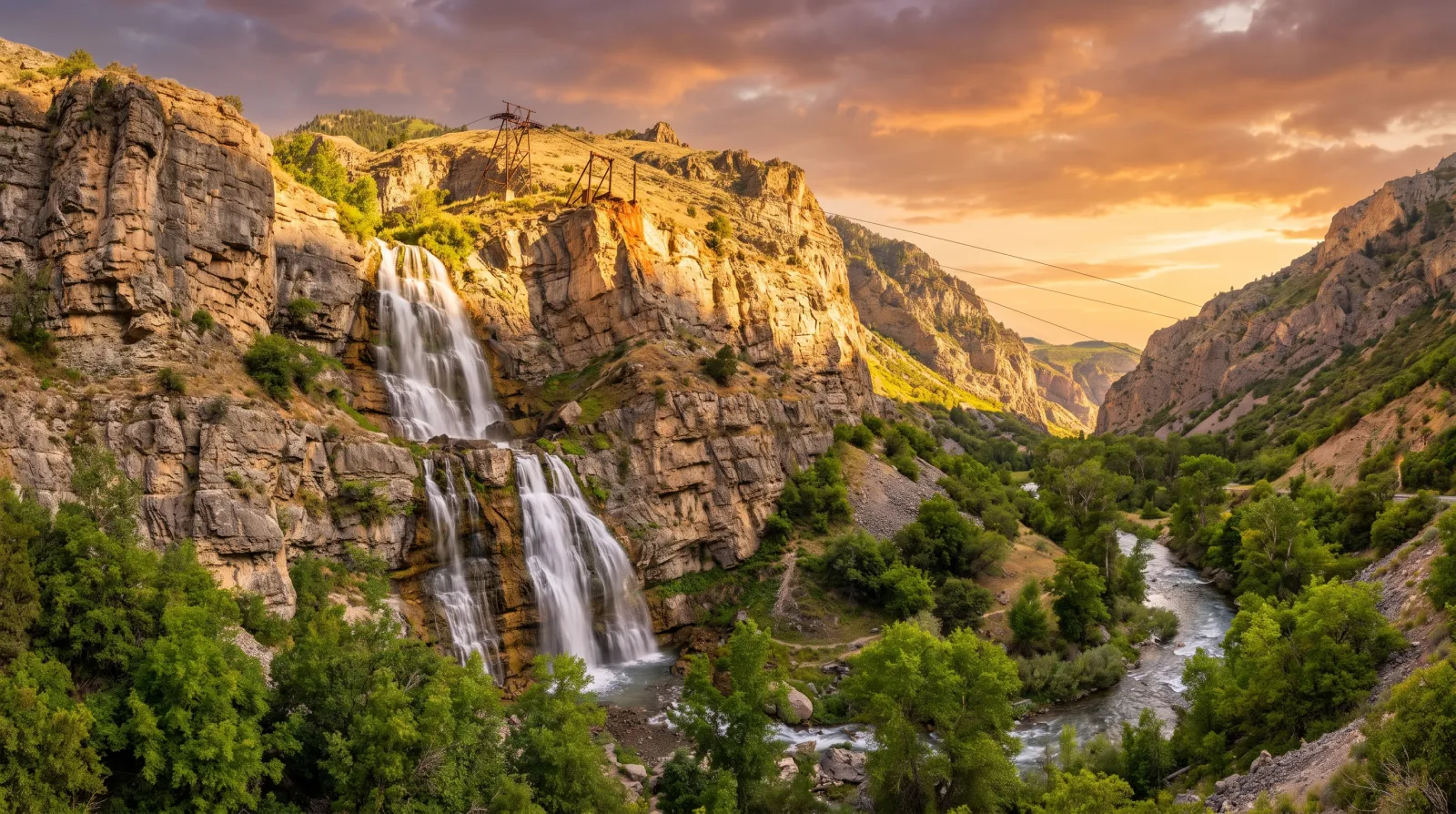
The Utah Waterfall That Used to Have a Restaurant on Top of It
Bridal Veil Falls in Provo Canyon is a 607-foot double cataract you can walk right up to on a paved trail. For 35 years, a cliffside tram climbed beside it to a restaurant and dance hall that burned, slid, and finally came down for good.
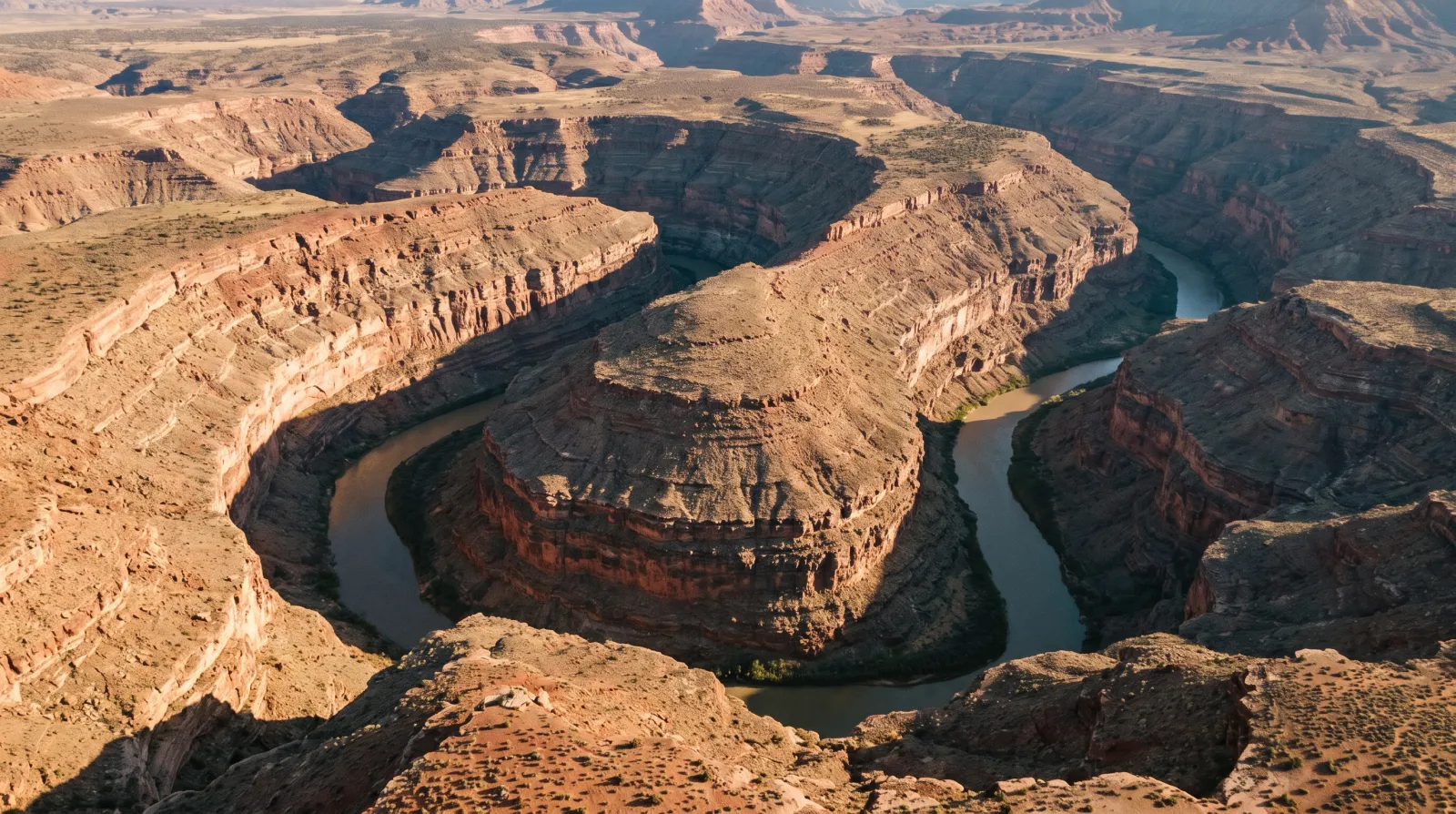
Goosenecks State Park: Where the San Juan River Goes Six Miles to Get One and a Half
At Goosenecks State Park, you stand a thousand feet above the San Juan River and watch it wind more than six miles through three stacked canyon loops just to move a mile and a half downstream — the finest entrenched meander on Earth, for five dollars a car.
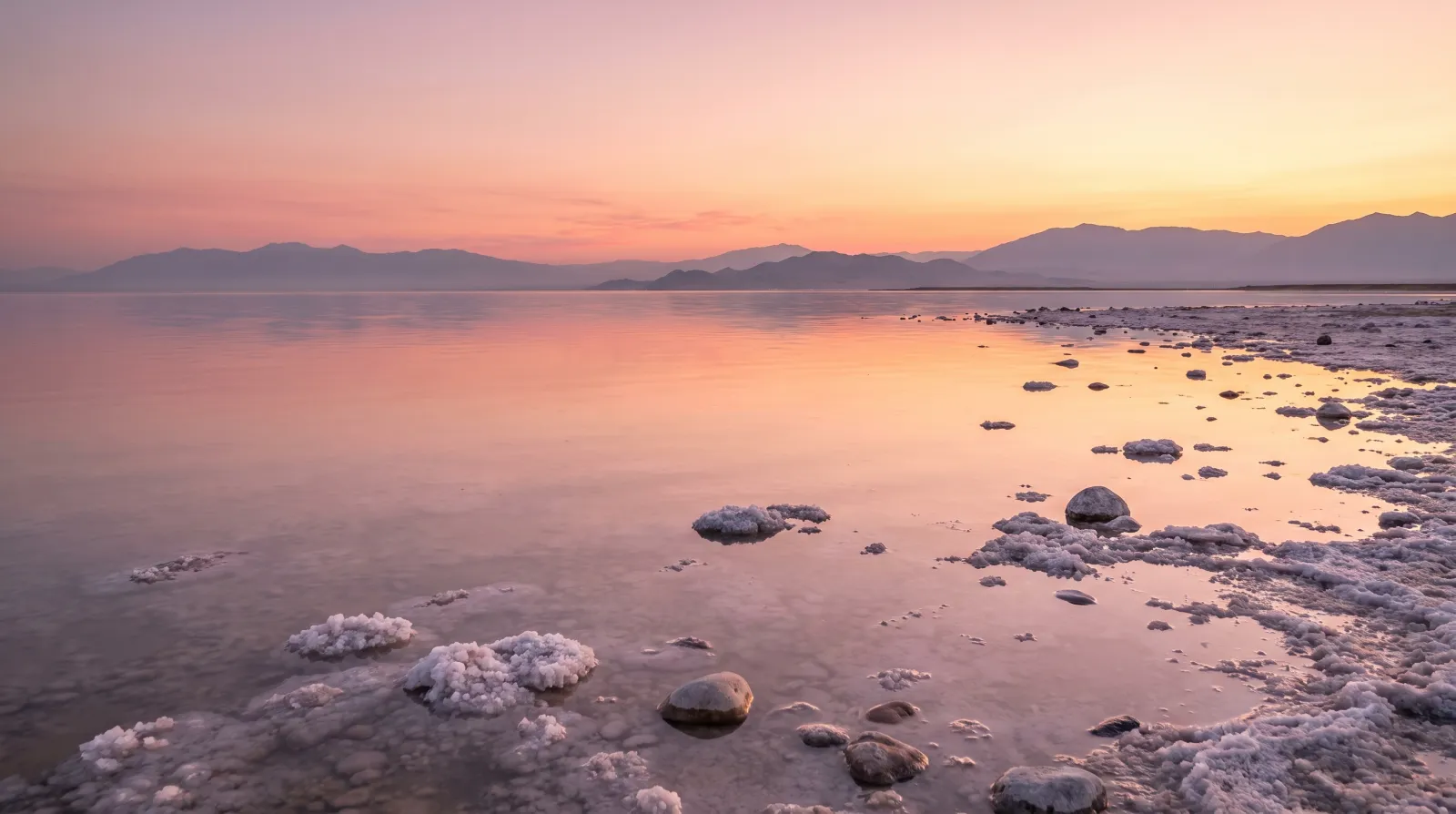
The Sea-Monkeys Were Real, and They Came From Utah
The Sea-Monkeys from the back of the comic book were brine shrimp, and the Great Salt Lake supplies close to 45% of the world's wild supply — a $60-million winter harvest that feeds fish farms from Norway to Ecuador.