Antelope Island: Utah's Free-Roaming Bison, the Float That Beats the Dead Sea, and the Lake Shrinking Around It
By Utah Untamed Editorial · Published
Antelope Island, reached by a seven-mile causeway northwest of Salt Lake City, is a 42-square-mile Utah state park home to a free-roaming bison herd descended from 12 animals introduced in 1893, now numbering 500 to 700. Visitors can float effortlessly in water up to ten times saltier than the ocean, tour the 1848 Fielding Garr Ranch, and watch the Milky Way from a certified Dark Sky Park — all while the Great Salt Lake itself sits near historic low water levels.
Antelope Island is the largest island in the Great Salt Lake — 42 square miles of grassland, granite, and beach sitting in the middle of the saltiest water in the Western Hemisphere, with one of the oldest and largest publicly owned bison herds in the country roaming it freely. It is also one of the easiest wild places to reach in Utah: a seven-mile causeway runs straight off the freeway corridor north of Salt Lake City, and on the far end you can stand next to a 2,000-pound buffalo, then walk into water that holds you up like a cork. This is the deep guide — what’s true, what’s worth your time, and what the falling lake is doing to all of it.
Start with the surprise most people miss from the interstate. The island is not a sandbar. It is fifteen miles long, four and a half miles wide, and it rises to Frary Peak at 6,589 feet — high enough that you’re looking down on the lake and the whole Wasatch Front from the summit. There are ten islands in the Great Salt Lake. This is the big one, and it’s the only one set up to receive visitors.
The bison came from twelve animals in 1893
The herd is the headline, and the number behind it is the part that stops people. In 1893, two ranchers brought twelve bison across to the island by boat. That was a moment when fewer than a thousand bison were left alive in all of North America, after a slaughter that had taken the continental population from tens of millions down to near nothing in a single human generation. Those twelve animals bred, and they kept breeding, undisturbed by predators and fenced in by saltwater.
Today between 500 and 700 bison run free across Antelope Island, one of the oldest and largest publicly owned herds in the United States. They are genuinely wild — not penned, not fed, not tame. They wander the road, they wallow in the dust, and in spring the rust-colored calves show up alongside them. Every fall the population swells with new calves toward 750 or 800, which is more than the island’s grass and water can carry through winter.
That’s where the roundup comes in. Once a year, usually in late October, hundreds of riders on horseback sweep the length of the island and drive the entire herd north into corrals near the Fielding Garr Ranch. It is one of the largest events of its kind in the country and it’s open to the public to watch. Wranglers run health checks, vaccinate, and sort the herd, then sell the surplus at auction to keep the population near a sustainable 500 to 550. Utah State Parks posts the exact roundup date each fall, and the limited horseback rider spots fill fast.
You float because the water is up to ten times saltier than the ocean
The other thing people come for is the float, and it lives up to the billing. The ocean averages about 3.5 percent salt. The Great Salt Lake runs anywhere from 5 to 27 percent depending on which part you’re in and how low the water sits — in places, close to ten times the saltiness of seawater. At that concentration the water is dramatically denser than your body, so you don’t swim so much as bob. Lie back and the lake pushes you to the surface and keeps you there.
People reach for the Dead Sea comparison, and it’s close, but the Great Salt Lake is its own thing. The lake is split by a rock-and-earth railroad causeway into two chemically different halves. The north arm, cut off from the freshwater rivers, sits near saturation around 30 percent and turns a strange pink from salt-loving microbes. The south arm, fed by the Jordan, Weber, and Bear rivers, runs lower, around 15 percent, and that’s the half with life in it.
A few honest notes before you wade in. The bottom near Antelope Island is shallow and muddy, the water can smell of sulfur where organic matter breaks down in the shallows, and any cut on your skin will announce itself the second the brine finds it. Bring sandals, bring fresh water to rinse off, and don’t put your face under. None of that ruins it. It’s just the difference between the brochure and the actual shoreline.
What lives in water that salty
Almost nothing, and that’s the point. The lake has no fish — it’s far too salty. What it has instead is two creatures that built an entire ecosystem out of brine.
Brine shrimp are the famous one. These half-inch crustaceans live by the trillions in the south arm, and their dried eggs, called cysts, are harvested off the lake’s surface every winter and shipped worldwide as feed for fish and shrimp farms. It’s a real industry built on a creature most people only know as the “sea monkeys” of comic-book ads.
Brine flies are the other one, and they’re the reason for the most common complaint about a summer visit. In the warm months the shoreline can carry billions of brine flies — dense black drifts of them that lift in a low cloud when you walk through and settle right back down. They don’t bite. They’re a nuisance for about thirty seconds and then you stop noticing, and they are the engine of the whole lake: the flies and the shrimp together feed an astonishing number of birds. The Great Salt Lake is a critical stop on the Pacific and Central flyways, and millions of migrating birds — eared grebes, phalaropes, avocets, gulls — refuel here on that brine-fly protein. The “gross” part of the lake is exactly what makes it one of the most important bird habitats in the hemisphere.
The animals the island is actually named for
It isn’t named for the bison. In 1845, the explorer John C. Frémont and the scout Kit Carson crossed to the island and shot a pronghorn for food, and the name stuck. Pronghorn — the fastest land animal in North America, often called antelope though they aren’t true antelope — were later wiped out on the island and then reintroduced. Around 200 of them live here now.
They share the island with more wildlife than the bison let you notice at first. Bighorn sheep work the rocky western slopes, mule deer browse the draws, and coyotes, bobcats, badgers, and porcupines fill out the rest. Watch the open grassland on the drive in and you’ll start picking out pronghorn standing still against the sage long after you’ve stopped seeing only buffalo.
A working ranch that predates almost everything in Utah
At the south end of the island sits the Fielding Garr Ranch, and the main house is older than nearly any building you can name in the state. The original adobe home was built in 1848, one year after the first Latter-day Saint settlers reached the Salt Lake Valley. It is the oldest Anglo-built structure in Utah still standing on its original foundation, and it was lived in continuously for well over a century — the ranch ran as a working sheep and cattle operation until 1981, when the state took over the island. You can walk through the house and the outbuildings today. After the bison and the float, it’s the quiet stop that anchors the day.
One of the darkest skies near a major city
For a place this close to a metro area, the night sky here is remarkable. Antelope Island was certified an International Dark Sky Park in 2017, which means that despite sitting roughly an hour from downtown Salt Lake City, the surrounding water and protected land keep light pollution low enough to see the Milky Way arc over the lake. The park runs star parties through the warmer months. If you can swing a clear, moonless night, the island after dark is a different experience entirely from the island at noon.
The hard part: the lake is leaving
Here’s the truth the postcards skip. The Great Salt Lake has been shrinking in recent years, trending toward the record low it set in November 2022 at about 4,188 feet of elevation, and you can see the retreat from the island. As the water pulls back, the consequences stack up: saltier water that pushes the brine shrimp toward their survival limit, exposed lakebed that dries to a fine dust the wind can carry into the city, and a marina that has at times sat too shallow to launch a boat.
This isn’t a reason to skip Antelope Island. It’s a reason to go, and to go understanding what you’re looking at. The exposed flats, the pink north arm, the long walk from the old waterline to the current shore — that’s a major terminal lake in trouble, in real time, an hour from the seventh-largest metro in the Mountain West. The island is the best seat in the state for seeing both how wild the Great Salt Lake still is and how much of it is at stake.
For a place where you can stand beside wild bison, float in water saltier than the ocean, tour an 1848 ranch, and watch the Milky Way over a lake — all within an hour of a major airport — it earns the drive. Go early or late in the day in summer to beat the heat, and give yourself half a day at minimum.
Frequently Asked Questions
Can you really float in the Great Salt Lake? add
Yes. The water is so salty — up to roughly ten times the ocean's salinity — that it's far denser than your body and you float effortlessly. Wear sandals for the muddy bottom, rinse off with fresh water after, and keep it out of your eyes and any cuts.
Are the bison on Antelope Island wild? add
Yes. The 500-to-700-head herd roams free across the island. Keep your distance — they're fast, unpredictable, and weigh up to a ton. Stay well back and never get between an adult and a calf.
When is the Antelope Island bison roundup? add
Usually in late October; Utah State Parks posts the exact date each fall. The public can watch from designated areas, and horseback rider spots are limited and sell out.
What's the deal with the brine flies at Antelope Island? add
Brine flies swarm the shoreline in summer. They don't bite and they pass quickly, and they're what feeds the millions of migrating birds the lake is famous for. Spring and fall visits see fewer of them.
Keep Exploring
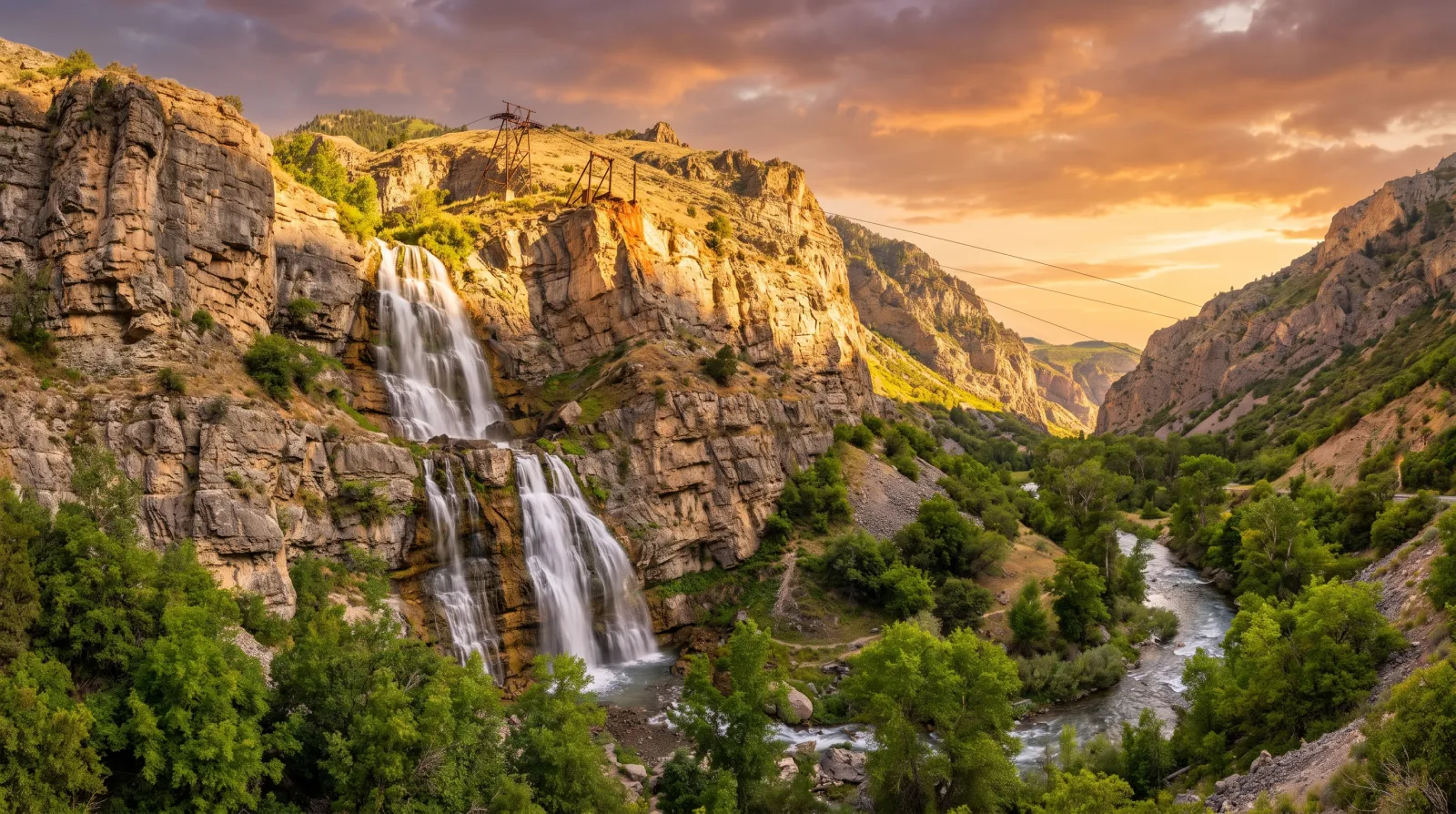
The Utah Waterfall That Used to Have a Restaurant on Top of It
Bridal Veil Falls in Provo Canyon is a 607-foot double cataract you can walk right up to on a paved trail. For 35 years, a cliffside tram climbed beside it to a restaurant and dance hall that burned, slid, and finally came down for good.
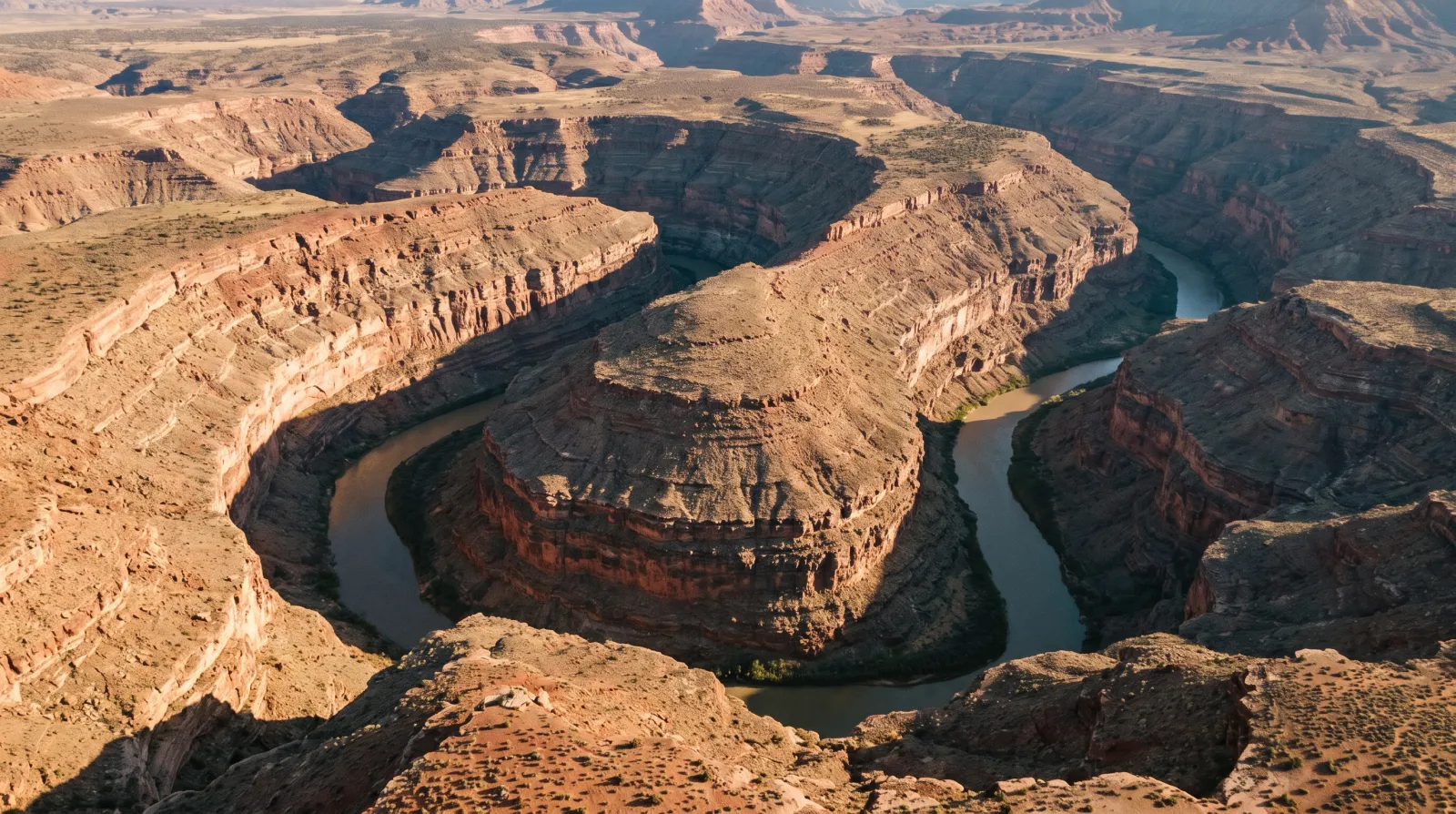
Goosenecks State Park: Where the San Juan River Goes Six Miles to Get One and a Half
At Goosenecks State Park, you stand a thousand feet above the San Juan River and watch it wind more than six miles through three stacked canyon loops just to move a mile and a half downstream — the finest entrenched meander on Earth, for five dollars a car.
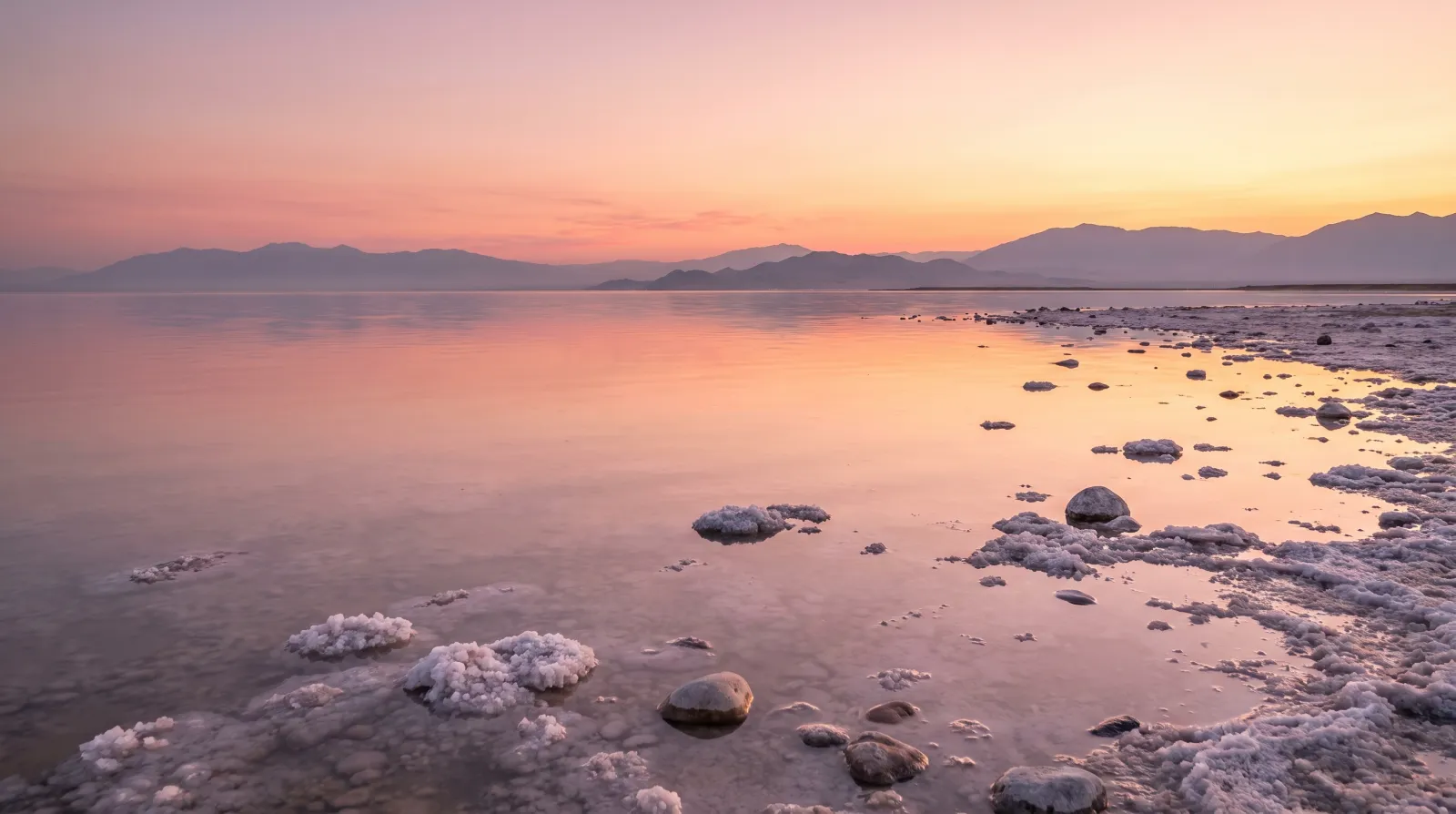
The Sea-Monkeys Were Real, and They Came From Utah
The Sea-Monkeys from the back of the comic book were brine shrimp, and the Great Salt Lake supplies close to 45% of the world's wild supply — a $60-million winter harvest that feeds fish farms from Norway to Ecuador.